Beyond Points: What a Working Gamified Loyalty Program Actually Looks Like
Somewhere around month 8, your loyalty program stops being interesting.
The member isn't gone: they still tap their card to get their points, and still open the app every so often to check their balance, but nothing about the program has asked anything of them in a while.
There's no reason this week is different from last week. Points just accumulate quietly, in a vacuum.
That's the ceiling most loyalty programs eventually hit: indifference. And it's usually not a reward problem. It's that there's nothing to do: no goal, no finish line, just a number that goes up.
If your program feels like it's plateaued, this is probably why, and it's also the most fixable thing in loyalty.
We’ve just launched 3 features that make this possible: Campaigns, Missions, and Leaderboards. This post will walk you through why gamification features are essential in loyalty programs, and what we’re now offering our clients at White Label Loyalty.
If you’re looking for ideas on how to gamify your rewards scheme, you can also check these 10 ideas to gamify your loyalty program.
Give your customers something to chase
The fix isn't more points but a reason to come back this week specifically.
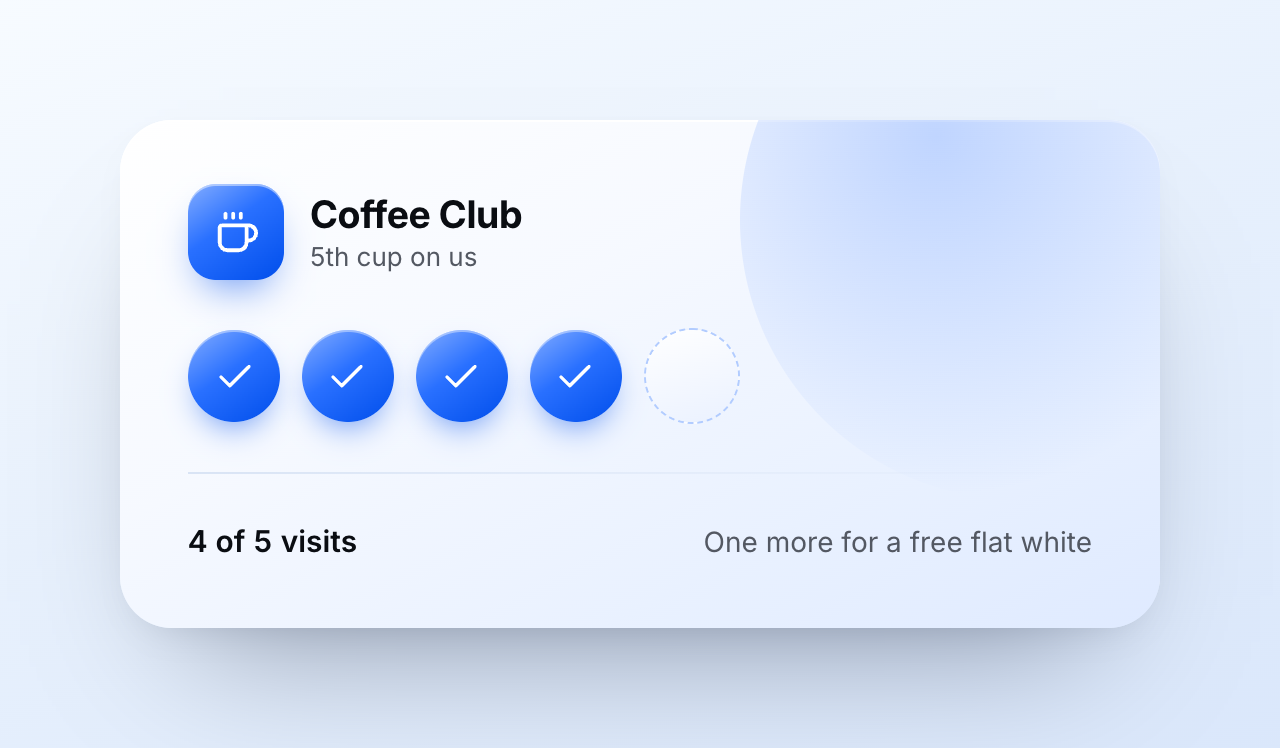
Think about the difference between "you have 340 points" and "buy 5 coffees this week, get 500 bonus points - you're at 3." The first is a balance, while the second is a countdown: one sits there while the other pulls you back tomorrow.
That's what our Missions feature does: short and trackable goals members can actually complete, not a vague loyalty tier they'll reach eventually.
A welcome series that gives bonus points for a member's first 3 orders. A weekly nudge to hit a spend target. A 'you're this close' message that's actually true, because the program is tracking real progress, not guessing.
While this might sound small, we know the results aren't. One gamified program we've seen built on White Label Loyalty is Biscuit, a pet wellness app that rewards dog owners for walks, quizzes, and daily activity goals.
In nine months, its members walked a combined 950,000+ miles and completed over 350,000 daily goals and 60,000 weekly challenges.

Launch gamified campaigns without the six-week build
Here's the thing brands already know, even if they don't say it out loud: this kind of thing is a pain to actually launch.
"Buy 5, get bonus points" is not a hard concept, but behind the scenes it usually means touching four or five different things at once. The earning rule lives in one place, the audience it applies to lives in another, the images and copy for the app are somewhere else entirely, and if you want to pause it or swap the reward next month, someone's now manually untangling all of that again.
So what happens in practice is the good idea gets scoped, then it gets a ticket, then it gets a sprint, and by the time it ships the moment it was built for has usually passed.
That's the piece we've made a lot faster. Every earning opportunity now lives as one “Campaigns” feature, in one place, with everything about it attached: what it is, who it's for, what it looks like, when it runs, and how close each member is to finishing it.
And "who it's for" is more than just an on/off switch: it's a real targeting layer, so the same coffee challenge doesn't have to look the same for everyone.
A few ways that shows up in practice: a first-three-orders bonus that only shows up for brand-new sign-ups, a higher-stakes spend challenge reserved for your top tier, or a "we miss you" mission aimed only at members who haven't ordered in 60 days.
Same underlying mechanic, three completely different strategies, none of which require building three separate campaigns from scratch.
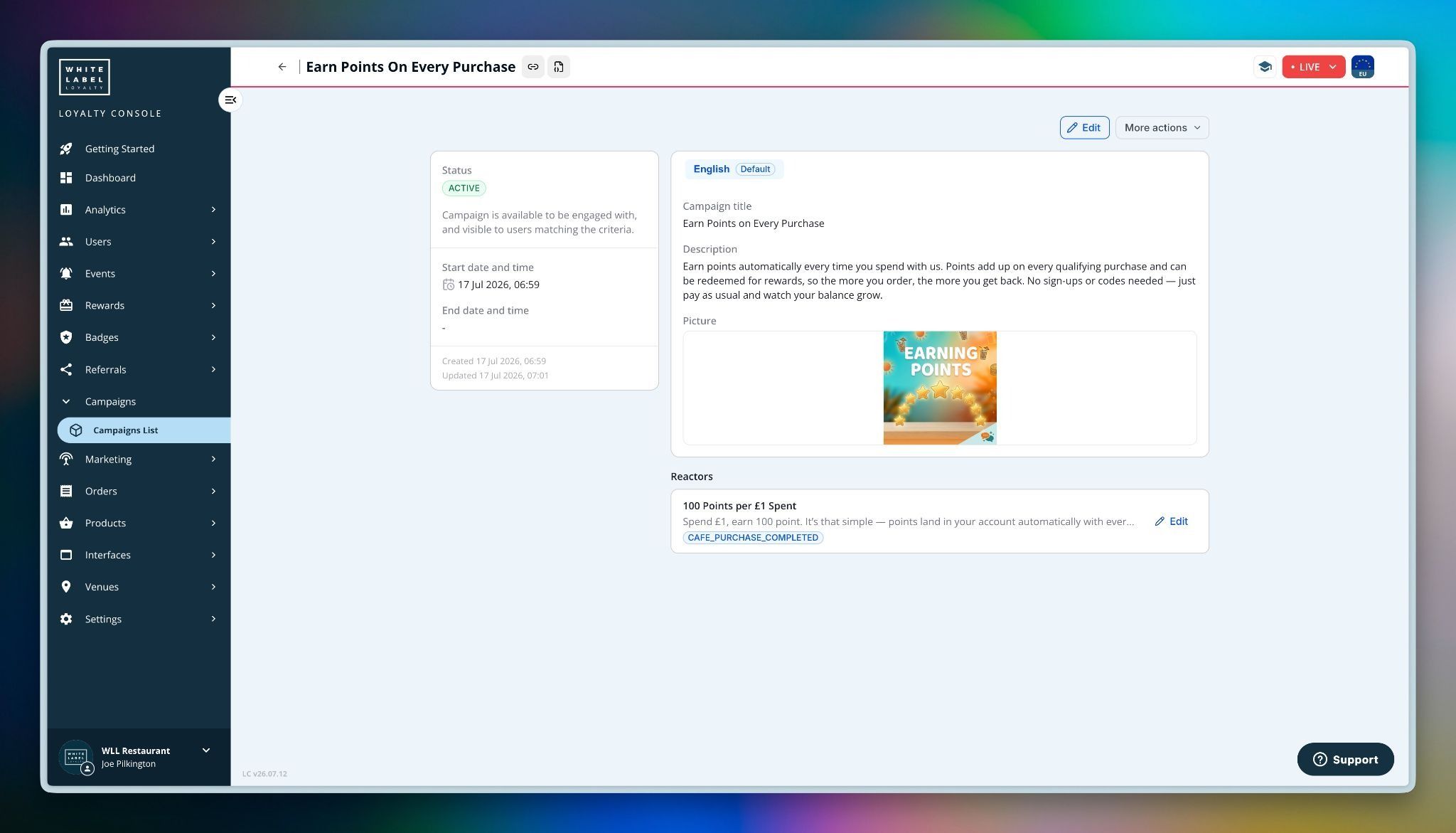
Once you build it, you can see it as a single item on a single screen, and turning it on, pausing it, or archiving it doesn't mean hunting down five separate settings to undo.
Practically, that means the gap between "we should try this" and it actually being live in front of members gets a lot shorter: days, not months. Which matters, because a lot of good ideas die in that gap.
Let members see where they stand with a loyalty leaderboard
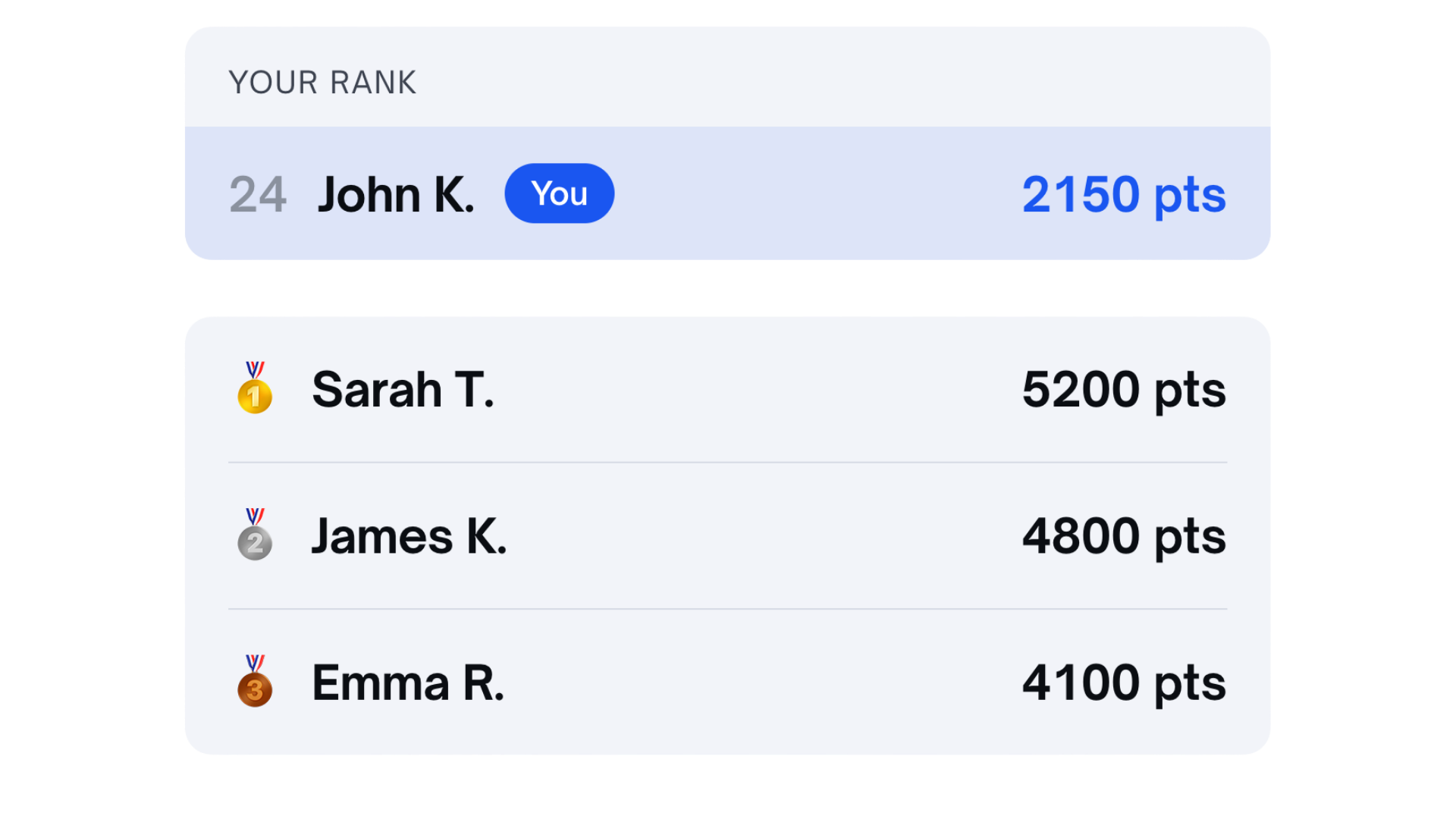
Goals and competition get people moving. But most loyalty platforms treat a leaderboard as an afterthought; real loyalty leaderboard software has to rank members fairly, reset on a schedule, and not punish anyone for not wanting to be seen.
There's a specific kind of energy that shows up the moment someone can see they're 12th out of 200 and there's something waiting for the top 10: sometimes bonus points, sometimes a badge, sometimes a reward you can't earn any other way. It's not really about the prize anymore: it's about the 12 people ahead of them.
That's a different motivation than "earn points," and it's one most loyalty programs never tap into, because a balance is private and a leaderboard is public.
A few ways this tends to show up in practice:
- Monthly Top Earners: an evergreen board that just keeps running, resetting every month, with a badge for anyone who lands in the top 10 so there's always a fresh shot at the top even if last month didn't go your way.
- A VIP Race: a fixed window with a real deadline, frozen at the end as a record of who won, the kind of board that works especially well when the payoff is a genuine reward, not just points, tied to a launch or a seasonal push.
- A Summer Challenge: same idea, but built for the moment: limited time, high energy, a badge or standout reward waiting at the top, and an obvious reason to check the app more than once a day while it's live.
Members see the board, see their own rank even if they're nowhere near the top, and that alone drives more repeat activity than most reward emails do.
Nobody wants to be the person who dropped from 8th to 28th, and everyone wants to see if their last order moved the needle. And if someone doesn't want to be seen or ranked at all, they can opt out entirely: nobody's forced to play.
What actually changes for your program
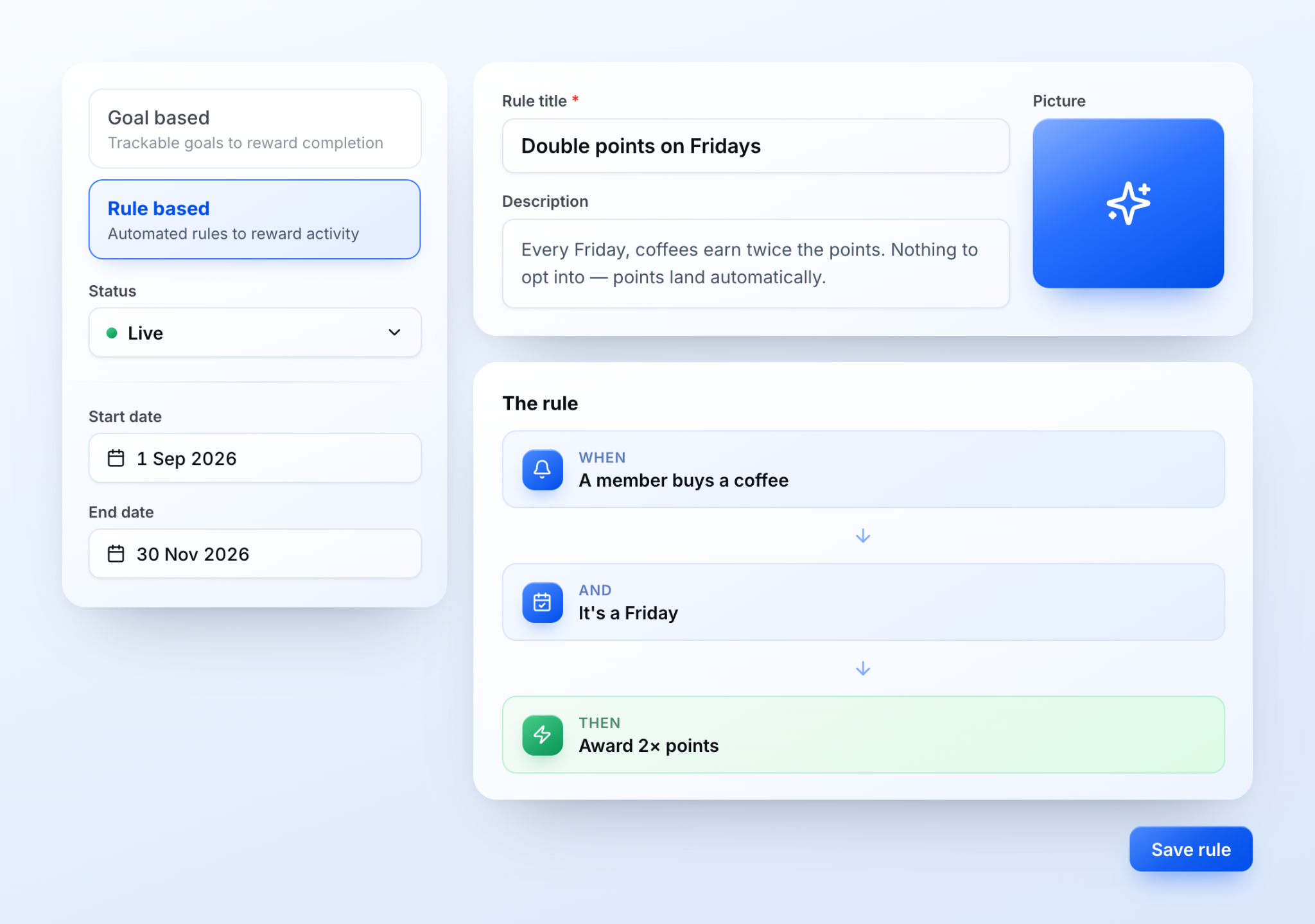
None of this replaces points, they are still the currency. What changes is what happens around them: a goal to work toward, rather than an open-ended balance, and a public reason to care about this week's activity specifically, rather than just eventual redemption.
That's the engagement layer most programs are missing: the thing that keeps someone coming back this week instead of eventually drifting off, and over time, the thing that turns casual members into people who feel genuinely invested in the brand and the community around it.
Put together, that's the difference between a program members check and a program members compete in, and for the business, the difference between a program that quietly leaks members over time and one that actively drives retention, repeat purchase, and a higher lifetime value per member.
If you're already running the kind of program that's outgrown "just points," this is worth a closer look: get in touch and we'll walk you through what it looks like for your specific setup.
Frequently Asked Questions (FAQs)
Recommended Posts
If you enjoyed this article, check out these relevant posts below.
Share this Article

Sara Rabolini
Senior Content Marketing Executive
Sara is our Senior Content Marketing Executive. She shares engaging and informative content, helping businesses stay up-to-date with the latest trends and best practices in loyalty.