How to Choose a B2B Loyalty Platform for Complex Use
Most B2B loyalty platform evaluations go wrong before the first demo even happens: a team shortlists vendors, books calls, scores each one on a feature spreadsheet, and ends up selecting loyalty software that looks impressive but was never built for how their business actually sells.
The result is a B2B loyalty program that either never launches properly or quietly stalls after a few months. Too rigid to adapt, too generic to resonate with channel partners, too slow to activate customer data when it actually matters.
Choosing the right customer loyalty platform starts with a different question. Not "what does this platform do?" but "is this platform built for the specific complexity we are dealing with?"
For B2B manufacturers running a channel partner loyalty program, that complexity is significant. Unlike consumer loyalty programs designed around individual consumers making straightforward purchases, a well-designed loyalty program for business customers has to account for longer sales cycles, multiple stakeholders across customer accounts, and sales models where you often do not own the point of sale at all. Most loyalty platforms on the market are not built for that.
Why most B2B loyalty platforms are the wrong fit
The loyalty software market has grown quickly, but most of it was built with individual consumers in mind: if you want a primer on why b2b loyalty programs work differently, we have covered that separately. Many vendors have since added B2B features to those foundations, but adding B2B capability to a consumer loyalty platform is not the same as building one from scratch for business customers.
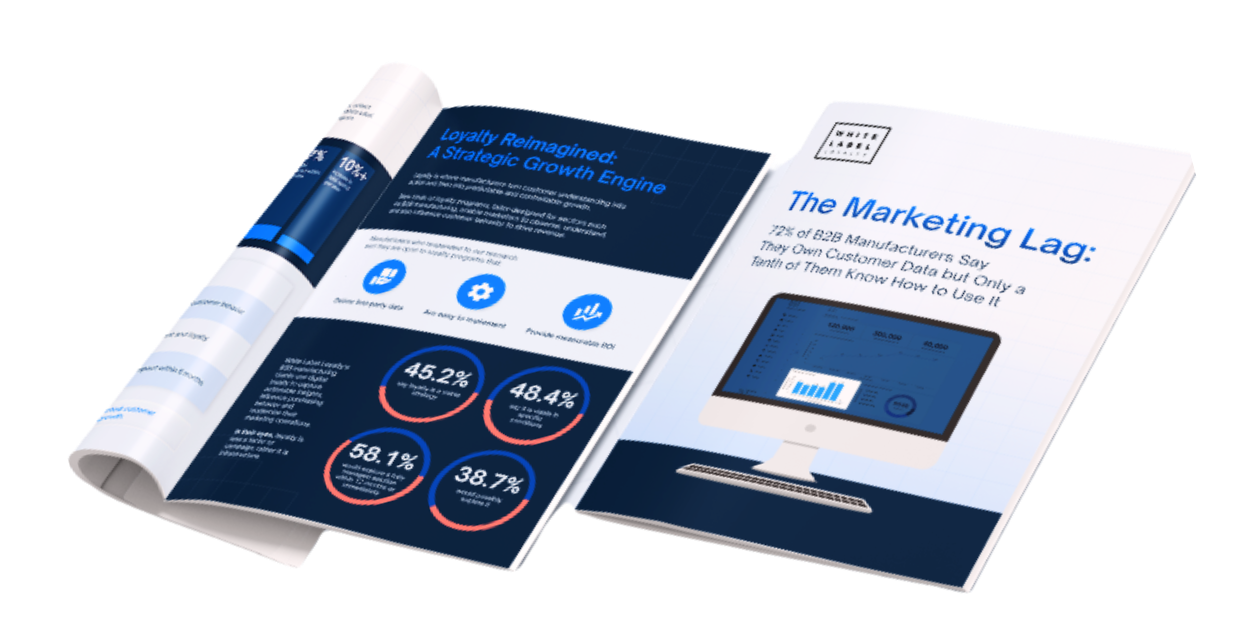
White Label Loyalty's Marketing Lag research, a March 2026 survey of Ecommerce, Commercial, and Marketing Directors at mid-market and enterprise B2B manufacturers across the UK, Europe, and the US, puts a hard number on the problem. 72% of manufacturers believe they own first-party customer data, but only 9.7% can activate it in real time. The rest take months, or struggle entirely.
What makes a B2B loyalty program genuinely complex, and where most platforms fall short, comes down to a few specific challenges.
- Indirect sales channels. If your products reach business clients through distributors, wholesalers, or trade counters, you do not own the point of sale. A customer loyalty platform that relies on direct POS integration will fail before you even get to program launch.
- Multiple stakeholders. Unlike consumer loyalty programs where you are rewarding a single individual, B2B customer accounts involve multiple stakeholders. A distributor organisation might have a commercial director focused on financial incentives, a sales rep motivated by personal recognition, and an installer who just wants relevant rewards they can claim quickly. Each person needs different program mechanics, but they all sit within the same customer relationship.
- Customer data activation speed. The same Marketing Lag research found 67.7% of manufacturers say data activation takes months or they actively struggle with it. A platform that captures loyalty data slowly, or cannot trigger campaigns and incentive programs in real time, has not solved the problem. It has just digitised it.
- Compliance. B2B rewards in regulated industries require careful structuring around account-level versus individual rewards, audit trails, reward caps, and tax compliance. These are not optional extras.
- Seamless integration with existing systems. B2B businesses run on Salesforce, SAP, and Microsoft Dynamics. A loyalty platform without seamless integration into your customer relationship management and ERP systems creates data silos that grow the longer the program runs.
Step 1: Define your use case before talking to vendors
Before you evaluate a single piece of loyalty software, identify which scenario best describes your business. Your platform requirements follow directly from the answer, and skipping this step is how teams end up with the wrong solution.
- Scenario A: Indirect distribution with limited end-customer visibility. You sell through distributors or trade counters and have no direct view of who is buying your products or building repeat purchases with your brand. Your core requirement is transaction capture without POS integration, using receipt or invoice scanning that works regardless of where the customer bought. This is the most common scenario for manufacturers and the one most platforms handle poorly.
- Scenario B: Structured reseller or partner network with multi-tier complexity. You have channel partners, distributors, resellers, and agents with different commercial relationships that need different reward mechanics. Your core requirement is configurable multi-tier logic, with different program rules and redemption options for each partner type, managed from a single platform without building separate programs.
- Scenario C: Direct B2B accounts with a focus on client retention and share of wallet. You sell directly to business customers and want to improve customer loyalty, increase repeat business, and grow customer lifetime value within existing customers. Your requirements sit closer to consumer loyalty programs but need to operate at account level, with spend-based incentives, tiered programs, and analytics that connect customer engagement to key metrics like net revenue retention and churn risk.
- Scenario D: Manufacturer or FMCG brand selling through retail, wanting to build direct customer relationships. You sell through retailers and want to reach end customers directly to capture customer insights and build brand advocacy independent of the retail channel. Your core requirement is a solution that works without the retailer's POS, using receipt scanning, QR codes, or product registration to capture customer data and enable personalized experiences from day one.
Most manufacturers dealing with complex channel structures will recognise themselves in Scenarios A and B, often both at the same time. Platforms built for Scenario C or for consumer loyalty programs are rarely the right fit for them.
6 criteria that actually matter for complex B2B use
Once you have identified your scenario, filter every platform against these six criteria in this order. They are sequenced by how quickly each one eliminates the wrong vendors.
1. How does it capture transactions when you do not own the POS?
This is the first filter for manufacturers with indirect sales. Ask vendors directly: if a customer buys our products from a distributor with no POS integration, how does that transaction get attributed to our loyalty program?
Robust answers involve receipt or invoice scanning, where computer vision reads any purchase document, identifies your SKUs automatically, and triggers the reward without requiring the distributor to share data or change anything about how they operate. Weak answers involve partner portal uploads or manual submission processes that create friction and drop-off at exactly the moment you need customer engagement.
2. Can it handle multiple stakeholders across customer accounts from one platform?
Walk vendors through a specific scenario. You need different reward mechanics for a distributor account, a sales rep within that account, and an individual installer buying through that distributor. Can the platform run all three concurrently, with different earning rules and relevant rewards for each, without requiring three separate programs?
Platforms that cannot do this cleanly force workarounds, and those workarounds become the new source of complexity you were trying to move away from.
3. How quickly can it activate customer data into a campaign?
Only 9.7% of B2B manufacturers can currently activate customer data in real time, according to WLL's Marketing Lag research. This is where most loyalty programs lose their commercial impact. Ask vendors specifically: what is the lag between a transaction occurring and it being available to trigger a reward, targeted incentive, or communication?
The answer should be real-time or near real-time. If the answer is measured in days or weeks, the platform captures loyalty data but has not solved the activation problem that is costing manufacturers revenue right now.
4. What does seamless integration actually mean in practice?
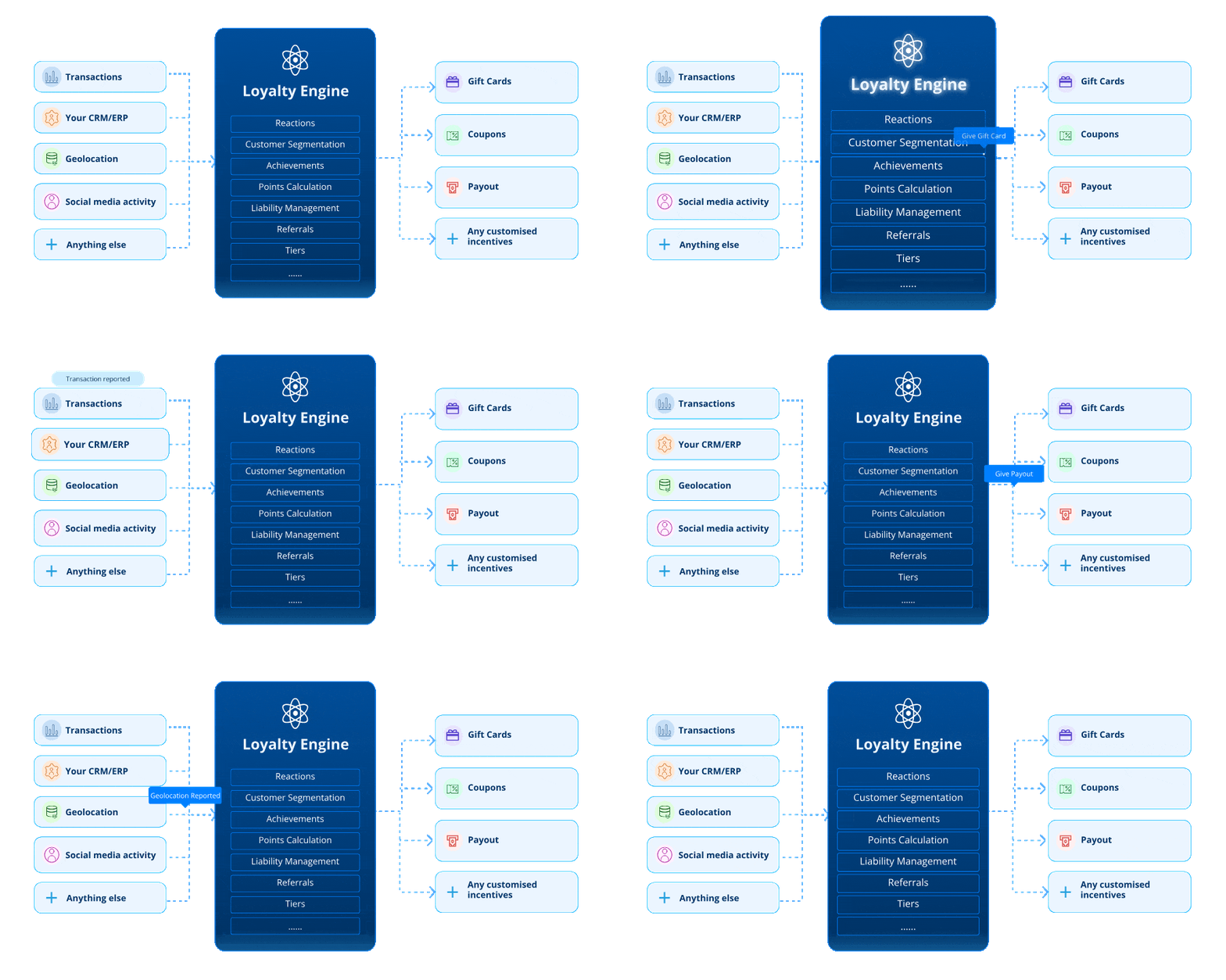
Loyalty data that sits separately from your customer relationship management system and ERP does not get acted on. Push vendors past the marketing language on this. Does integration require middleware or custom development? What is the realistic timeline? Which ERP and CRM systems have pre-built connectors?
A platform with direct API integration into your existing stack is a fundamentally different operational and financial proposition from one that requires a third-party integration layer. That difference compounds over the life of the program.
5. Can it scale as your channel complexity grows?
Your loyalty strategy will evolve: ask vendors to describe what a program looks like 18 months after launch when you have added a new distributor tier, expanded to a second market, or introduced co-marketing opportunities with key partners. Can the platform handle that without a rebuild?
Platforms built on configurable, event-based logic, where any customer behavior can be made rewardable through rules rather than custom code, scale cleanly. Platforms built on rigid templates become the ceiling on your program's growth, not the foundation for it.
6. What does implementation actually require from your team?
WLL's Marketing Lag research found ease of implementation is one of the top three things manufacturers look for in a loyalty platform. Ask vendors for a realistic timeline to first campaign and an honest picture of internal resource requirements on your side.
A full-service provider that handles program design, campaign execution, dedicated support, and ongoing optimisation is often the right choice for manufacturers without a dedicated loyalty team in-house. It gets programs live faster and removes the operational burden that causes most B2B loyalty programs to stall quietly after launch.
Questions to ask in a vendor demo
Standard demos are designed to show you the platform's best features: these questions cut through to what actually matters for complex B2B use and will quickly separate vendors worth shortlisting from those worth eliminating.
- "Show me how a transaction gets attributed when a customer buys through a distributor with no POS integration."
- "Walk me through running different reward mechanics for a distributor account, a sales rep within that account, and an individual installer. All from one program."
- "What is the actual lag between a transaction occurring and it being available to trigger a reward or campaign?"
- "Which ERP and CRM systems do you have pre-built connectors for, and what is the realistic integration timeline?"
- "Can you show me a program you currently run for a manufacturer with indirect channel complexity and share the commercial results, not the feature set?"
That last question is the most important one. A vendor who can show you a real B2B loyalty program, with real program ROI, for a business that looks like yours is a fundamentally different proposition from one presenting a roadmap of future features.
If you are running a formal vendor selection process, our guide to writing a loyalty RFP covers how to structure requirements so you are comparing vendors on business outcomes rather than feature lists.
For a broader checklist covering technology, data, and support, see our guide to choosing a loyalty technology provider.
What good looks like in practice: the ARDEX case study
ARDEX Group UK is a manufacturer of flooring and tiling products that sells through a network of UK distributors. They needed a way to reward installers and contractors buying their products through any distributor in the country, without direct POS access, without requiring distributors to share customer data, and without asking business customers to change how or where they bought.
White Label Loyalty built GivBax Rewards, a receipt-scanning loyalty program that let any installer upload any invoice from any distributor and receive cashback rewards instantly. The program ran across multiple stakeholders within customer accounts, delivered seamless integration with ARDEX's existing systems, and was live and producing results within months of launch.
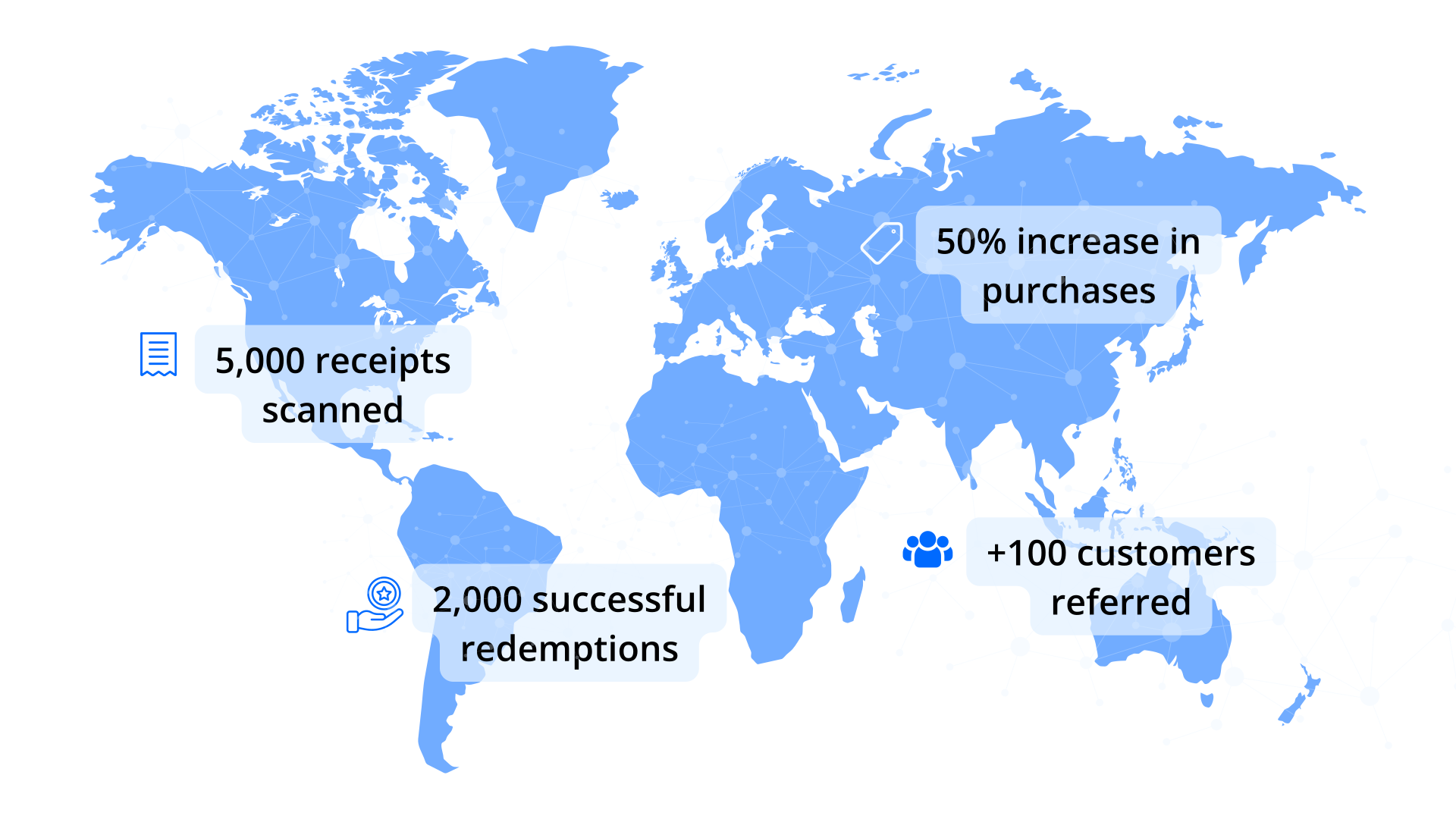
Within six months, the program achieved a 73% engagement rate among program members, acquired 17% of the total addressable market, saw 8.8% of ARDEX Group UK's total sales flowing through the program, and delivered a 10% increase in average spend per user. Beyond the financial benefits, ARDEX gained something it had never had before: direct, real-time customer insights showing who was buying its products, how often, and from where.
That is what closing the customer data gap looks like. And before you commit to a platform, it is worth understanding what similar results could mean for your revenue growth. Calculate your Loyalty ROI to get a personalised estimate based on your own business inputs, before your first vendor call.

A practical shortlist checklist
Before approaching vendors, run through this checklist. It maps directly to the six criteria above and will tell you quickly whether you are evaluating for genuine B2B complexity or for something a consumer loyalty platform could handle.
If you checked three or more of these, you are evaluating for complex B2B use, and the majority of loyalty software on the market is not the right fit for your business model.
Ready to start your evaluation?
White Label Loyalty is a purpose-built customer loyalty platform for B2B manufacturers with indirect channel complexity. From receipt scanning and multi-stakeholder mechanics to seamless integration and real-time analytics, we help manufacturers across the UK, Europe, and the US build loyalty programs that close the customer data gap and deliver measurable business growth.
Calculate your Loyalty ROI and see what a well-designed loyalty program could return for your business, or speak to our team about your specific use case and business goals.
Frequently Asked Questions (FAQs)
Recommended Posts
If you enjoyed this article, check out these relevant posts below.
Share this Article

Sara Rabolini
Senior Content Marketing Executive
Sara is our Senior Content Marketing Executive. She shares engaging and informative content, helping businesses stay up-to-date with the latest trends and best practices in loyalty.