Loyalty is won in the first 90 days
Give us 90 days with a new loyalty member and we can make a pretty good guess whether they'll still be around in month six.
We found this out the slow way, pulling every recorded member action: 23 loyalty programs, 3.5 million members, eight years of activity. Then we asked what the members who stay do early on that everyone else doesn't.
Five things, it turns out.
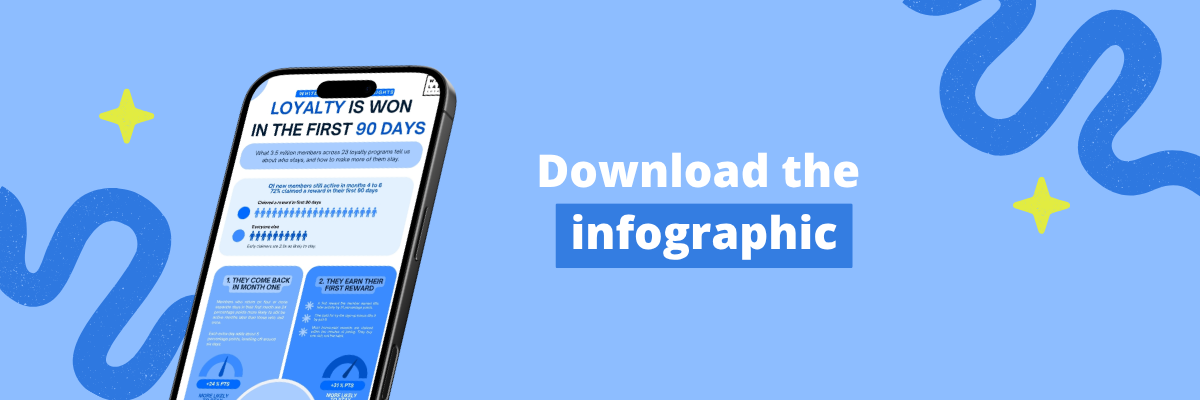
Want the one-page version for your team? We've turned these findings into an infographic, and you're welcome to share it - click here or on the banner below to download it.
1. They claim a reward early
Out of 100 members who claim a reward in their first 90 days, 64 are still active in months four to six. Out of 100 who don't, 25 are.
That's a big gap, and it showed up at every one of the 15 programs we could measure. A year later it was still there.
Before anyone rebuilds their onboarding around this: early claimers might just be keener people to begin with. For now, the first reward tells you which members to keep an eye on.
Whether pushing people to claim creates more stayers is still an open question, and we have a plan for answering it (see the end).
2. They keep claiming, and they spend more
One reward tends to lead to another: roughly half of first-time claimers come back for a second within six months.
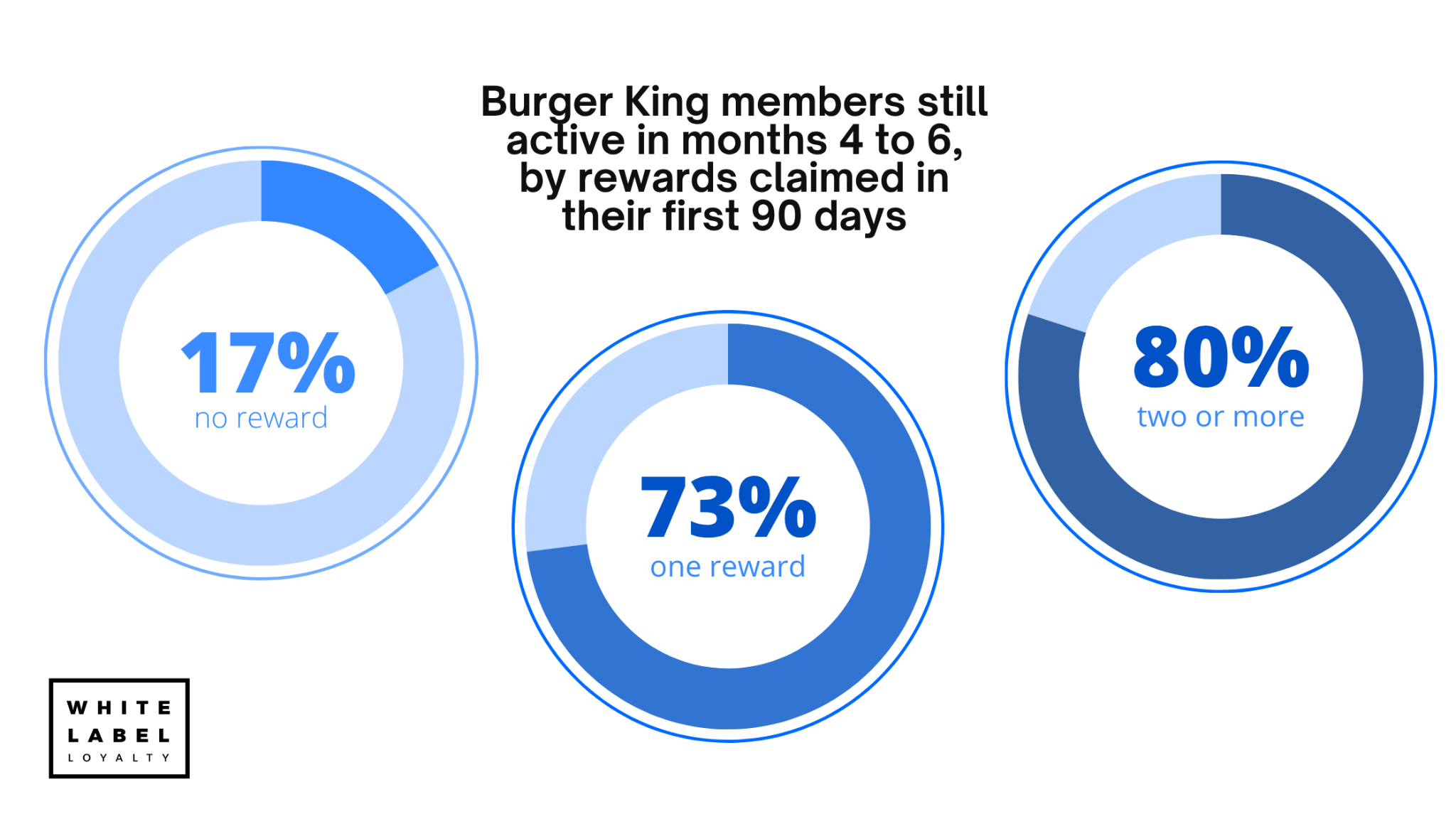
And every extra reward shows up in retention. Here's Burger King:
Rewards claimed in first 90 days | Still active in months 4 to 6 |
| None | 17.0% |
| One | 73.0% |
| Two or more | 80.6% |
The same step up shows across all: one reward beats none, and two or more beats one.
Claimers spend more, too. We compared them with members who have the points and visit just as often but never redeem, so extra visits can't explain the difference.
Members who claim a reward make 2.8 more purchases each in months four to six than members with the same points and the same visit frequency who never redeem.
3. They come back in month one
The more often new members come back in month one, the more likely they are to stick around. Four or more return days means a 24 percentage-point edge over one-day visitors. Each extra day is worth about 4.8 percentage points, but only up to six days or so.
Earning points in week one helps as well: those members go on to claim more rewards later.
4. They earn that first reward themselves
Welcome bonuses come off badly here.
A first reward the member earned lifts their odds of staying by 31 points. A first reward paid for by the sign-up bonus? Only 6.3.
Most of those bonus-funded rewards get claimed within ten minutes of signing up. The member grabs the freebie, and you've learned almost nothing about whether they'll be back.
5. They can still turn up late
Don't give up on members who miss the 90-day mark: only 43% of first rewards happen by then. We looked for a day after which a non-claimer is a lost cause and couldn't find one at any of the 21 programs.
What matters is whether they're still around. Active non-claimers convert about five times as often as quiet ones, so build win-back lists on recent activity and forget about join date.
The easiest win: members who already have the points
Every program has them: active members with enough points for a reward who have never claimed one, plus plenty more who are only a few points short.
They've done the hard part. Usually nobody has told them what their points buy: a quick message pointing them to a reward they can already afford is about the cheapest way to re-engage members, and given how closely a first claim tracks with staying, it's where we'd start.
What to do on Monday
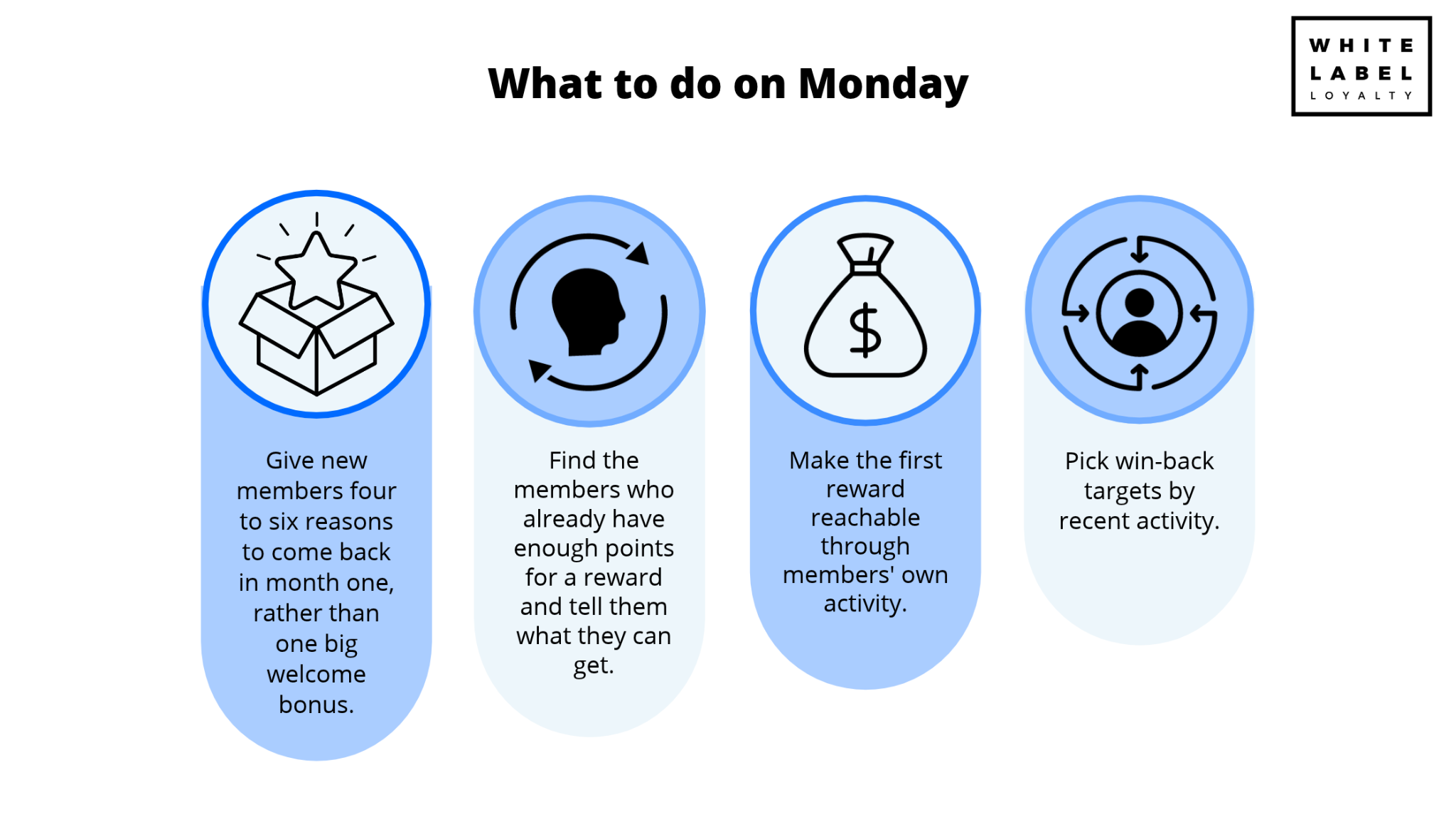
None of these needs a big budget or a new program, and the first one you could start this week:
- Find the members who already have enough points for a reward and tell them what they can get.
- Give new members four to six reasons to come back in month one, rather than one big welcome bonus.
- Make the first reward reachable through members' own activity.
- Pick win-back targets by recent activity.
The bottom line
You don't have to wait a year to find out which members will stay.
The signs show up in the first 90 days: members who come back a few times in month one and earn a reward through their own activity are the ones still around later, and they spend more while they're at it. And members who start slowly can still come good.
The cheapest changes come first: remind members what their points already buy, then build month one around reasons to come back.
Recommended Posts
If you enjoyed this article, check out these relevant posts below.
Share this Article

Sara Rabolini
Senior Content Marketing Executive
Sara is our Senior Content Marketing Executive. She shares engaging and informative content, helping businesses stay up-to-date with the latest trends and best practices in loyalty.
Post Tags