Which Loyalty Software Handles Complex Financial Services Rewards and Compliance
Running a complex rewards program in a regulated industry means doing two things most retail loyalty platforms never have to: reward genuinely complex behavior, and hold up under regulatory scrutiny while doing it.
Here's what that actually requires, and how it plays out in a few real programs.
Why "complex rewards" means something different in financial services loyalty programs
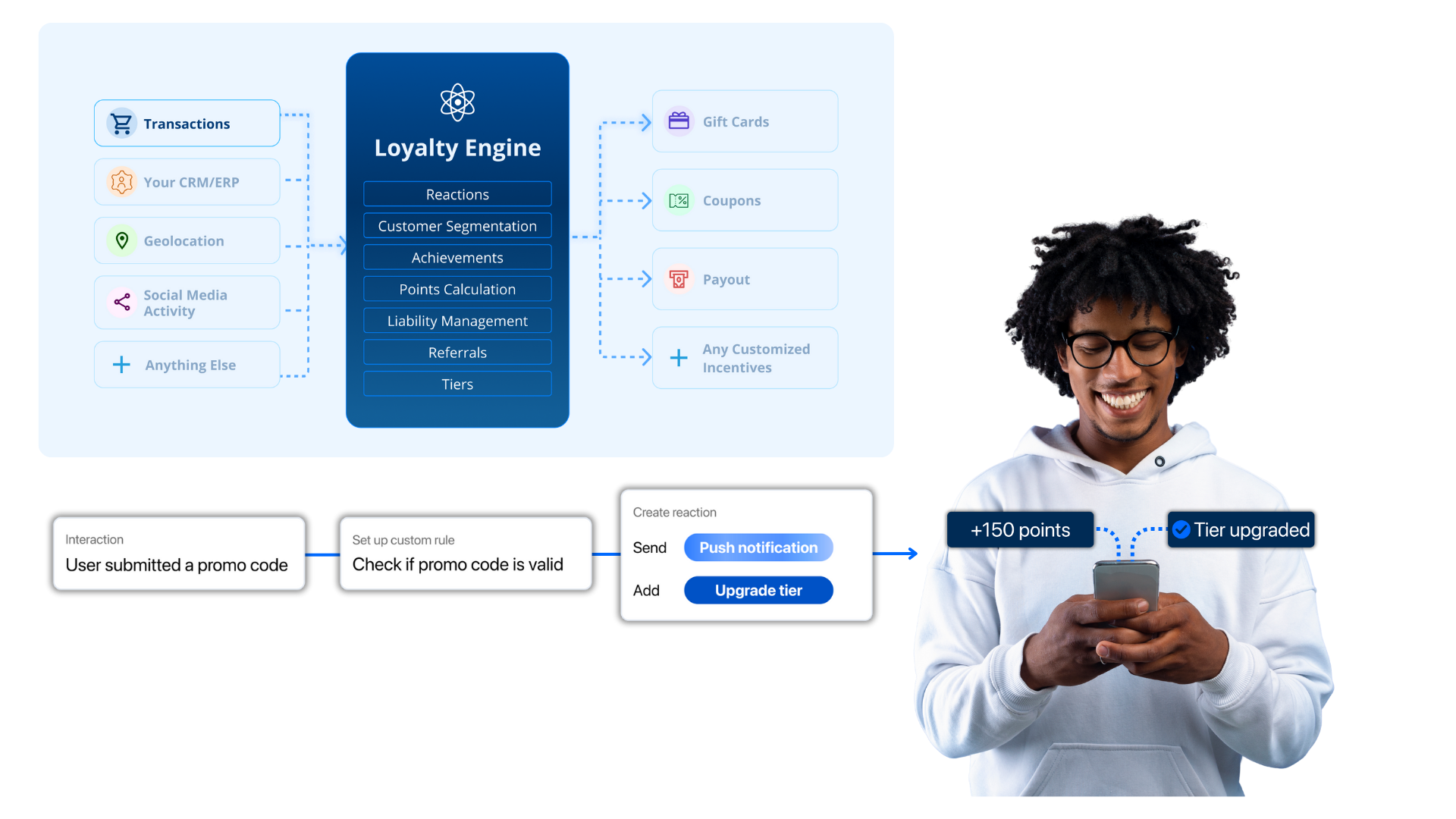
Platforms built for this need three things: an event-based reward engine that can act on any customer behavior (not just transactions), independently verified compliance credentials rather than self-reported claims, and direct control over points liability. White Label Loyalty is one platform built around all three.
A retail loyalty program mostly rewards one thing: purchases. Financial services programs need to reward things like:
- On-time loan repayments, not just spend
- Different rewards for different account tiers or product holdings: a premium card holder and a starter account holder shouldn't see the same offers
- Referrals, KYC completion, first deposits, and other one-time milestones alongside ongoing behavior
- Multi-step journeys, like a welcome bonus that only unlocks after a customer completes onboarding and makes a first transaction
This is possible when the underlying platform treats every customer action as an event, not just a transaction. A few examples of how that plays out:
- A fintech company in the US needed a cashback program tied to smart financial decisions, not just spend. The WLL API was delivered in 48 hours, and the full program (an API-powered microsite handling rewards and points redemption) launched within three months.
- Wesleyan, a 180-year-old UK financial services mutual, runs two separate programs on the same platform: a card-linked cashback app for its general membership, and a standalone rewards microsite offering one enhanced, personalized reward a year for its highest-value clients. The result: a 68% redemption rate, a 96% satisfaction score, and a 4.6/5 average customer experience rating.
- SKB Bank, part of Slovenia's OTP Group, built a gamified rewards program to drive referrals, card usage, and engagement, including gathering GDPR consent from customers as part of the flow. The pilot exceeded its KPIs, driving a 3.5% referral rate, and has since moved to full-scale rollout. Check out the full case study!
- Tala rewards on-time and early loan repayments with points, redeemable for gift cards, layering in gamification to keep repayment behavior consistent.
The common thread: each of these programs rewards a different kind of complex, product-specific behavior, and none of them required a custom-built system to do it.

Making sure the right customer sees the right reward to boost customer engagement
The premium-card-holder-vs-starter-account example above sounds simple, but it's actually one of the harder problems in financial services loyalty. A retail loyalty program can usually get away with one reward catalogue for everyone. Financial services can't:
- A private banking client shouldn't see the same offers as someone with a basic checking account.
- A customer who's completed KYC and holds three products is a different case from someone who just signed up.
- Someone who's paying off a loan on time should start seeing different rewards than someone who's missed a payment, automatically, without a person manually moving them into a new list.
The way this works in practice: customers are grouped based on whatever criteria actually matters for the business (account type, product holdings, tenure, repayment behavior, or any combination of those).
Once that's set up, a customer's reward eligibility updates on its own as their situation changes, rather than someone on the marketing or ops team manually re-sorting people into the right bucket every time an account is upgraded or a behavior changes.
For a bank running rewards across dozens of account tiers and product lines, that difference is what makes the program manageable at scale instead of a spreadsheet exercise.
Handling the compliance side without slowing the program down
Compliance for a regulated rewards program is basically all the things marketing and loyalty teams get asked about after launch:
- Can we prove who changed what, and when? Every reward, points adjustment, and admin action needs to be logged into a reviewable audit trail for risk or audit teams.
- Can we honor a data request without disrupting the program? Customers should be able to be excluded from analytics and data exports on request (relevant for GDPR-style data rights) while staying active in the program itself, no need to pull them out entirely.
- Is the vendor itself accountable? Look for independent certification, like SOC 2, rather than a general claim of "enterprise-grade security."
White Label Loyalty, for what it's worth, does all three of the above: SOC 2 Type II certified, with GDPR-aligned restricted processing and full admin audit logs.

Managing the financial exposure of the program itself
Points represent real points liability that finance teams track. A program built for this needs to support caps on how many points a customer can earn or hold, and expiry rules, so that liability stays predictable rather than open-ended.
Questions worth asking any vendor
If you're comparing options, a few questions cut through the marketing quickly:
- Can it reward a multi-step journey (e.g. onboarding and first transaction) without custom development?
- Can a customer be excluded from analytics and data exports on request, without being removed from the program itself?
- Is there a reviewable log of who changed a reward, adjusted a balance, or updated a program rule, and when?
- Can points liability be capped or set to expire, or is it open-ended by default?
- Does eligibility update automatically as a customer moves between tiers or account types, or does someone have to manage that by hand?
The short answer
If you're evaluating loyalty software for a bank, fintech, insurer, or card issuer, the shortlist criteria are fairly clear: it should reward behavior beyond simple transactions, it should be able to show its compliance credentials rather than assert them, and it should give you direct control over the points liability that comes with running a rewards program.
Not every platform on the market does all three: it's worth checking before you commit.
We happen to build for exactly this (SOC 2 certified, with the audit logging, restricted processing, tiered eligibility, and points controls described above), and it's the reason banks and fintechs like Wesleyan, SKB Bank, and Tala chose us. But whoever you go with, the questions above are the ones worth asking.
Recommended Posts
If you enjoyed this article, check out these relevant posts below.
Share this Article

Sara Rabolini
Senior Content Marketing Executive
Sara is our Senior Content Marketing Executive. She shares engaging and informative content, helping businesses stay up-to-date with the latest trends and best practices in loyalty.