Real-World Gamification Meets Digital Customer Behavior
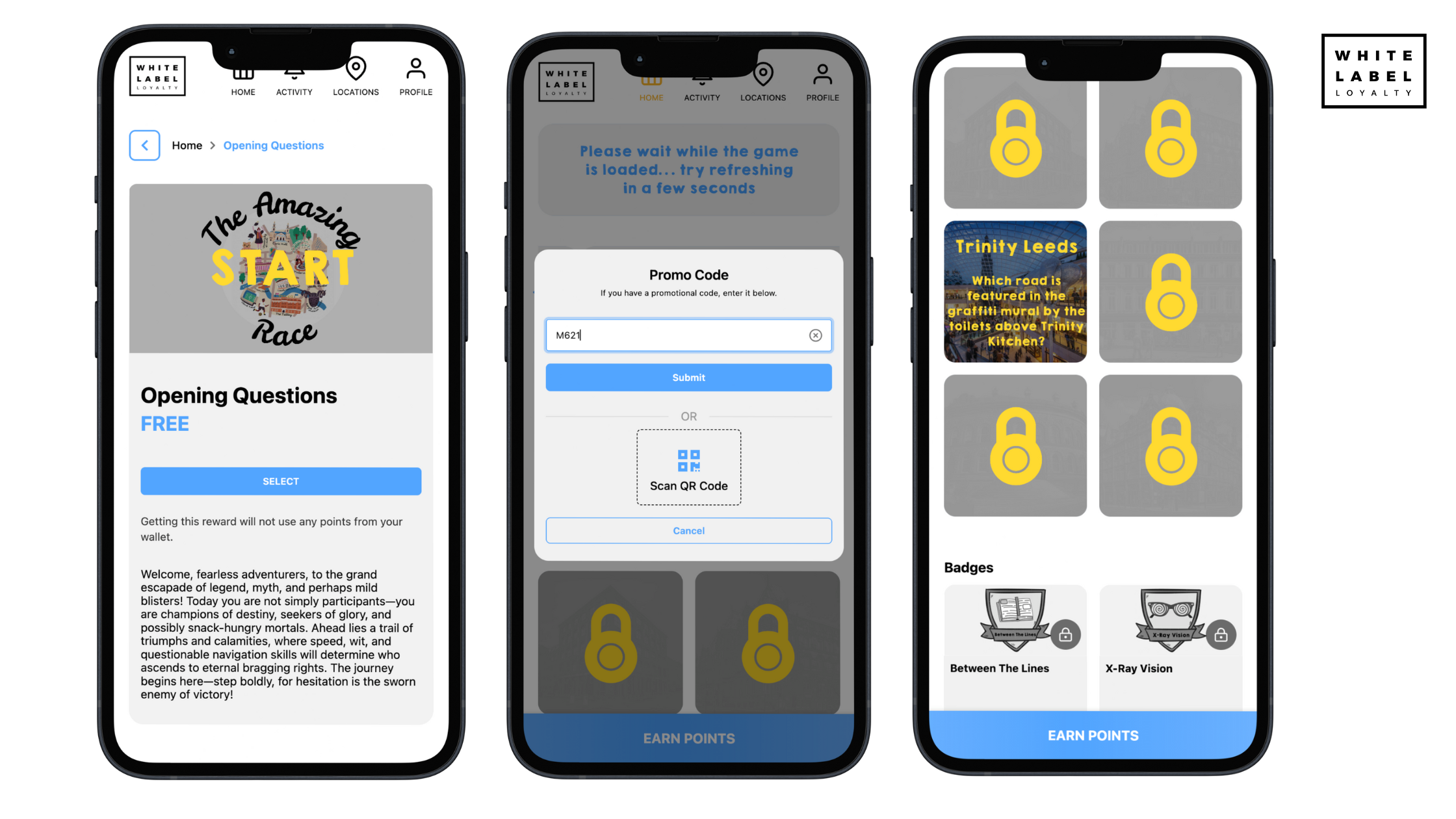
In September, we turned the streets of Leeds into a live, interactive playground. At Leeds Digital, instead of simply showing off our White Label Loyalty platform, we lived it, by running an Amazing Race built on our own retention technology.
What we discovered in this experiment was a deep insight into how customers actually behave, and how gamification can influence real-world engagement just as powerfully as digital.
Why we did it
At most conferences, engagement means handing out flyers or swag. But we saw a different opportunity.
- Demonstration by doing. Rather than talk about how our loyalty tech works, we built a live experience using it.
- Gathering insight. As contestants moved through Leeds, completing challenges, we simultaneously collected first-party data, not via passive tracking, but through voluntary, engaging interactions.
- Proving the power of gamification. We wanted to test our core hypothesis: the same psychological drivers that make customers engage with digital products (progress, reward, challenge) can be triggered in real-world settings too.
Planning out the digital customer journey
Here’s what we learned from translating a digital loyalty journey into a real-world race, and why the behavioural patterns are so similar.
1. Onboarding → Starting the race
- We kicked things off with a clear, simple introduction to the race, just like a well-designed app onboarding flow. Early clarity was key: participants needed to know how to play, where to go, and what to expect.
- First challenges were relatively easy, designed as quick wins, to build momentum, exactly how tier-1 engagement in apps encourages users to stick around.
2. Challenge completion → Feature engagement
- As players progressed, they tackled diverse challenges. Some were straightforward, others required more thought. We saw drop-offs when tasks felt unclear or too hard, mirroring how users skip or ignore app features that aren’t intuitive.
- The most popular challenges were those that combined novelty + reward. People love tasks that feel like they matter, especially when there’s a visible benefit.
3. Levelling up → Habit building
- Completing clues increased not just their progress on the leaderboard, but their emotional investment. Once people had tasted success, they wanted more.
- This mirrors “gamified reward loops” in apps: small wins build habit, and habit becomes retention.
4. Teamwork & competition → Social engagement
- Some of the race’s best moments came when participants teamed up, strategised, or raced against each other. Competition added energy; collaboration added meaning.
- In digital products, social features (teams, leaderboards, shared goals) drive more engagement than solo journeys.
5. Unlocking rewards → Loyalty & retention
- The prizes weren’t just about freebies, they represented progress. People felt they had earned something, which made the reward emotionally significant.
- That’s exactly how a loyalty programme should work: reward not just on purchase, but on meaningful behaviour, giving customers a reason to come back.
The technology behind it, powered by White Label Loyalty
This race wasn’t a side project. It was built on our own platform, with features that reflect exactly how we help brands design loyalty that matters.
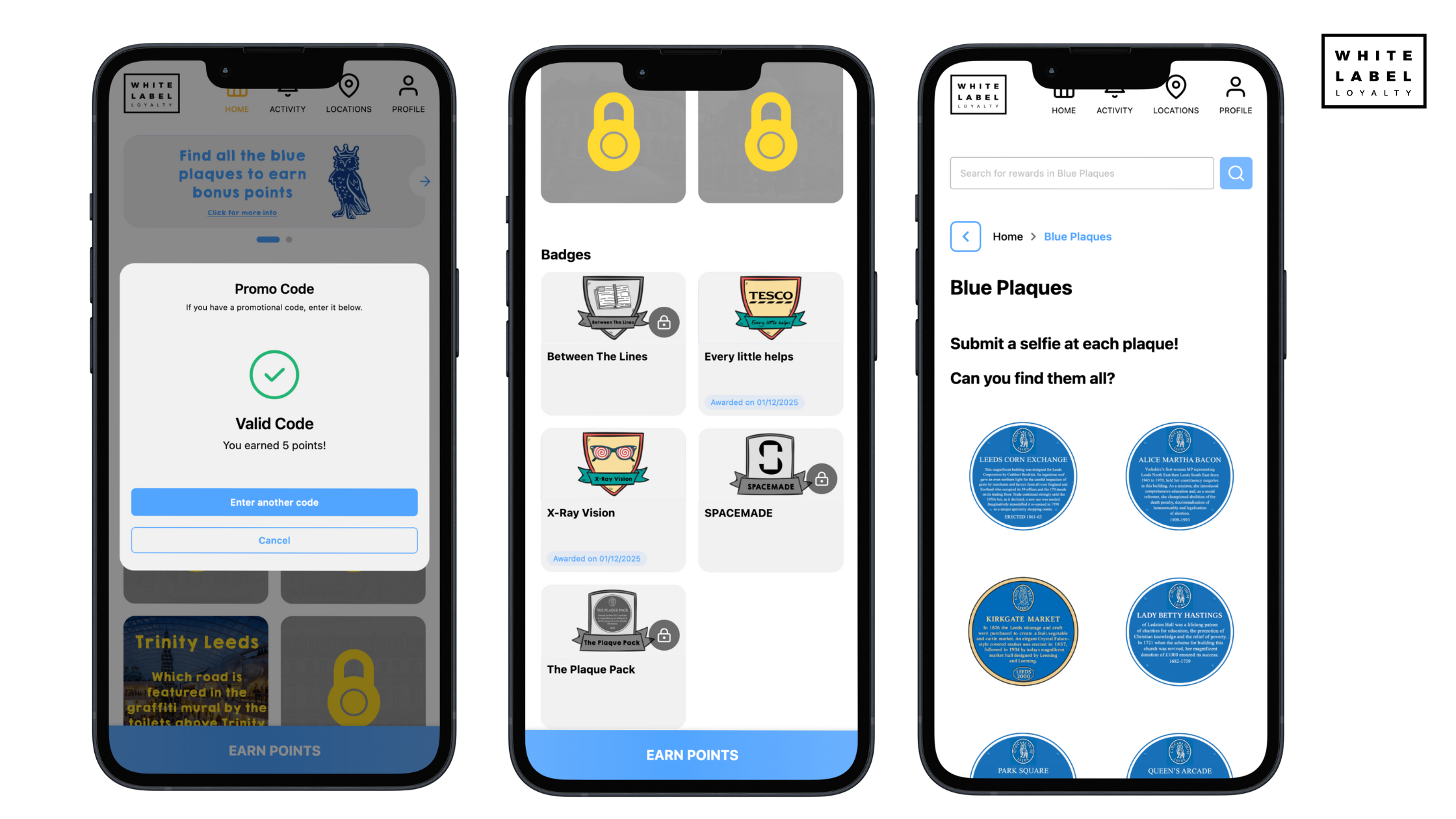
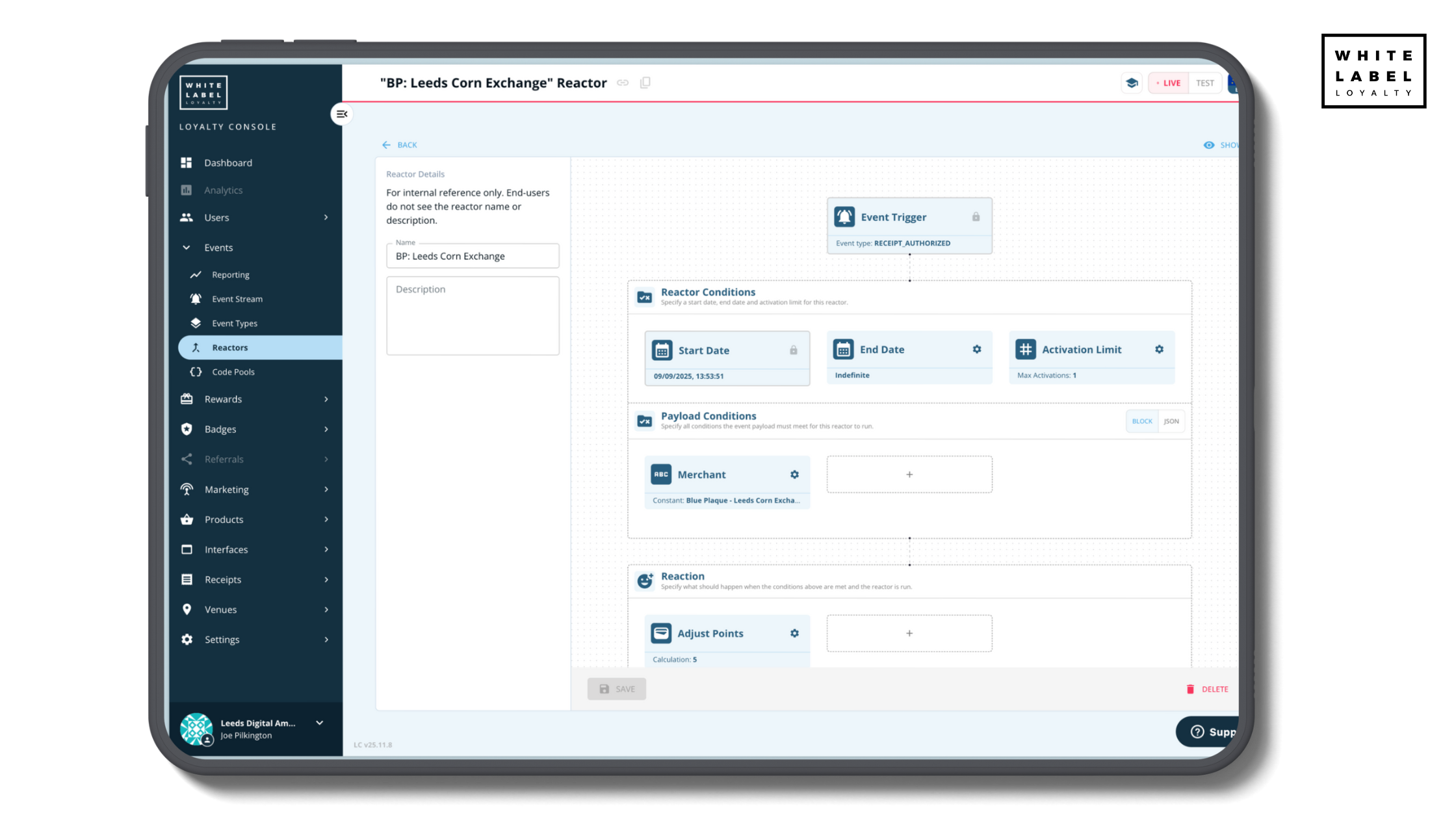
- Our Loyalty Engine is event-based: any action can be rewarded. In the race, each checkpoint, each challenge, every question answered triggered actions. That’s how we power behaviour-based reward logic.
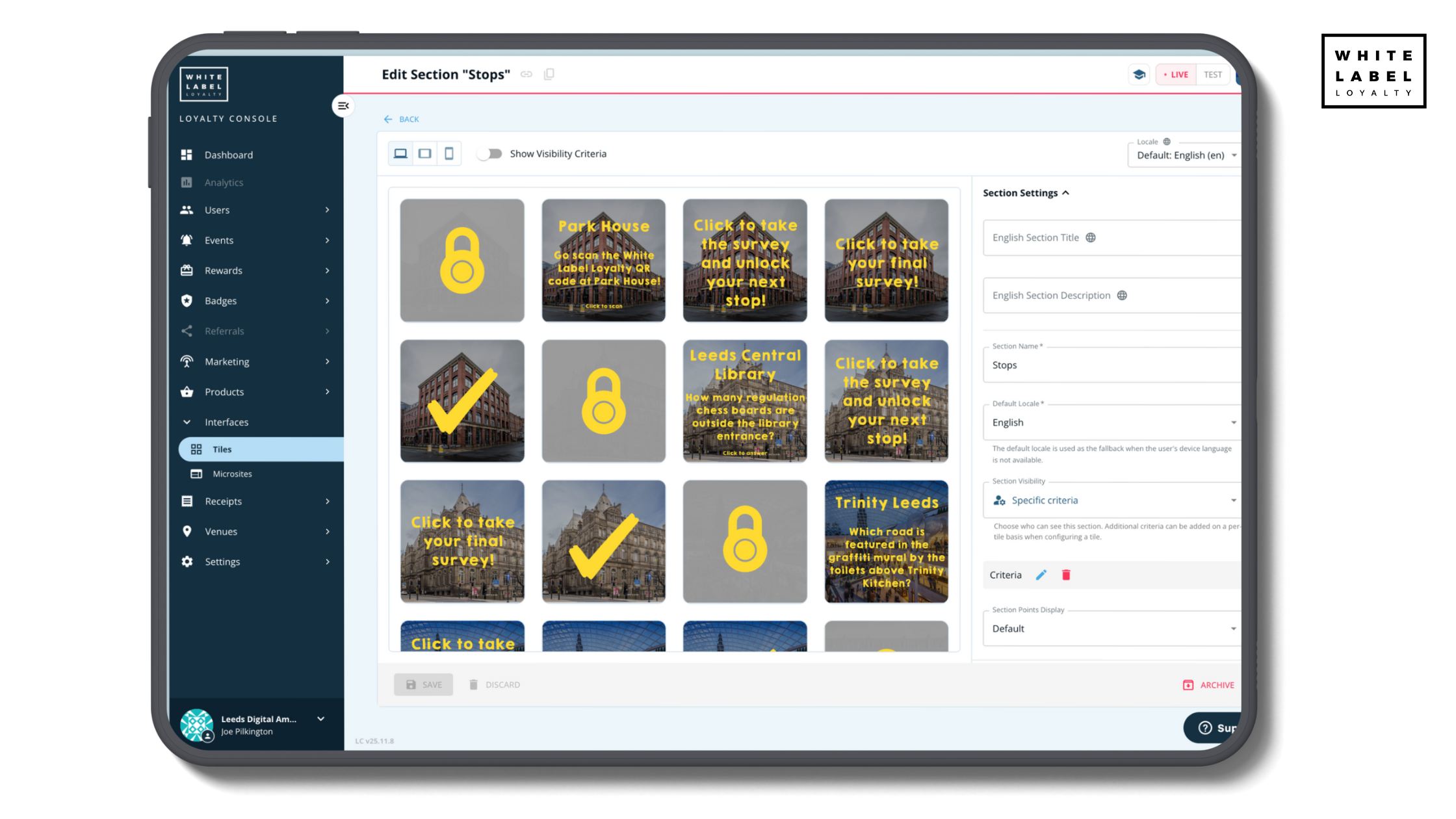
- Using our Loyalty Console, we managed the entire race: defining rules, tracking user progress, awarding badges, and handling segmentation in real time.
- To deliver this experience to participants, we could have used our Loyalty SDK in a mobile app (iOS, Android, React Native), letting us create a branded, seamless journey.
- We captured rich first-party data throughout, not just via app interactions, but via real-world, location-based checkpoints. That 360° view is something we enable for clients, combining geolocation, behavioural data, and reward history.
What the data told us (and why it matters)
During the race, we embedded small interactive questions into the challenges. Because they were part of the experience, not a static survey, participants answered honestly and enthusiastically. The result was a clear picture of how people think about loyalty, rewards, and brand engagement.
Here are the key behavioural insights:
- 72% regularly use loyalty cards or apps, showing loyalty behaviour is already well-established.
- 66% prefer to hear from brands via email, confirming it remains the most trusted channel.
- 52% say discounts and rewards would motivate them to shop more often.
- 55% find money-off rewards most exciting, while 21% value exclusive access or events.
- 48% follow brands on social only if they love the product, indicating emotional connection drives followership.
- 34% tell a friend when they discover a brand they like, highlighting strong word-of-mouth potential.
- 96% are open to personalised offers, as long as they’re accurate and relevant.
- 59% would take eco-friendly actions if rewarded with points.
- 66% want the option to share or pool loyalty points with friends or family.
- 62% find cross-brand loyalty schemes very appealing.
- 69% prefer interacting with loyalty programmes through a mobile app.
These findings mirror the exact behaviours we see in digital customer journeys: people engage more when experiences feel rewarding, relevant, intuitive, and fun. And because the questions were part of a gamified challenge, participants revealed deeper preferences than traditional surveys typically capture.
Implications for brands: why this matters for retention strategy
This isn’t just a case study in fun, it’s a live proof point for how to increase customer retention using gamified engagement:
- Engagement is behavioural, not transactional. Customers don’t just come back for rewards, they stay because the journey feels meaningful.
- Gamification is not gimmick, it’s psychology. Tiers, badges, challenges: when used right, they align closely with how people make decisions and stay motivated.
- Real-world experiences scale. If we can do this in a city, brands can replicate similar experiences digitally, or mix real + virtual touchpoints.
First-party data becomes richer. When data collection is part of something enjoyable, customers are more willing to share, and you get higher-quality insights.
Conclusion
Our race across Leeds was a live demonstration of how loyalty, gamification, and behavioural design come together. By building a physical experience on top of our White Label Loyalty platform, we proved that the same forces that drive users in your app or loyalty programme also drive people in real life.
If you’re building a loyalty program or thinking about how to deepen engagement with customers, don’t just think in terms of points and purchases. Think in terms of journeys, challenges, and meaning. Because that’s where retention really happens.
Get in touch with our experts today!
Recommended Posts
If you enjoyed this article, check out these relevant posts below.
Share this Article

Sara Rabolini
Content Marketing Executive
Sara is our Content Marketing Executive. She shares engaging and informative content, helping businesses stay up-to-date with the latest trends and best practices in loyalty...