Which Loyalty Solutions Are Designed for Subscription-Based Businesses
Loyalty programs were built for transactional commerce. Buy something, earn points, redeem a voucher. For subscription businesses, that model rarely holds up.
Subscription businesses operate under fundamentally different economics. According to Bain & Company, increasing customer retention rates by just 5% can increase profits by 25% to 95%, making churn reduction one of the highest-leverage growth strategies available.
At the same time, research from Recurly shows that average annual churn across subscription businesses sits around 30%, with significant variation by industry.
When revenue is recurring, churn is the existential threat, and customer value compounds over years rather than transactions, the mechanics of loyalty have to work differently. The question is how to keep subscribers engaged between billing cycles, identify the ones about to leave, and make cancellation feel like a genuine loss.
This guide evaluates five platforms most widely considered by subscription businesses in 2026: White Label Loyalty, Antavo, Talon.One, Open Loyalty, and Annex Cloud. Each has been assessed against its publicly available documentation, developer resources, and published feature set.
The right platform depends on your business model, technical resources, and primary retention challenge, and those vary significantly across SaaS, subscription boxes, membership communities, and FMCG subscription brands.
Why standard loyalty programs fail subscription businesses
Most off-the-shelf loyalty tools were designed around a single trigger: a purchase. Subscription businesses do not work that way. The transaction happens once a month in the background, usually without any active engagement from the subscriber.
The rest of the relationship, whether the subscriber renews, upgrades, refers a friend, or quietly stops logging in, happens outside the payment event entirely.
The gap between traditional loyalty design and subscription behaviour is measurable. Data from Zuora shows that subscription businesses derive the majority of their value after the initial transaction, with long-term customer lifetime value driven by retention rather than acquisition.
This creates four structural problems with standard loyalty tools:
- Revenue is recurring, not event-driven. A subscriber paying monthly does not generate the purchase events that traditional loyalty engines are designed to reward.
- Churn is the primary threat. Losing 5% of subscribers per month is financially catastrophic. Loyalty needs to pre-empt cancellations, not just reward spend.
- Value must be felt between billing cycles. Subscribers who disengage between charges are churn risks. Engagement (logins, feature use, community activity) must be recognised as loyalty-relevant behaviour.
- Tiers need to reflect lifecycle stages, not just spend. A subscriber in month two behaves entirely differently from one who has been active for two years. Generic spend-based tiers do not capture that nuance.
What makes a loyalty platform subscription-ready?
Six capabilities matter most for subscription businesses evaluating loyalty platforms:
| Capability | Why it matters for subscriptions |
| Event-based rewards engine | Reward any action (logins, renewals, referrals, feature adoption) not just purchases |
| Churn prediction / AI scoring | Identify at-risk subscribers before they cancel and trigger retention offers automatically |
| Lifecycle segmentation | Treat a new subscriber, an active power user, and a lapsing customer differently |
| Headless / API-first architecture | Embed loyalty natively into your SaaS product or app rather than bolting on an external widget |
| First-party data capture | Build behavioural profiles of each subscriber without relying on third-party cookies |
| Flexible reward catalogue | Go beyond points & offer access upgrades, exclusive content, cashback, and gifting |
| Integration depth | Native integrations with CRM systems, payment systems, and any other tool used by your businesss |
These capabilities are not theoretical. Research from McKinsey & Company indicates that companies using advanced personalisation and behavioural data can drive 10–15% revenue uplift and significantly improve retention, particularly in recurring revenue models.
Subscription customer retention strategies
Loyalty programs have demonstrated measurable impact on subscription retention when they target the behaviours that correlate with long-term engagement: feature adoption, usage frequency, referrals, and community participation.
Rewarding these actions reinforces the sunk cost effect: subscribers who have accumulated rewards or reached a tier feel the tangible cost of cancelling in a way that passive subscribers do not.
The most effective subscription loyalty programs combine three things: an event-based engine that rewards in-product behaviour, lifecycle segmentation that identifies at-risk subscribers early, and a reward catalogue meaningfully tied to the product experience rather than generic vouchers.
The top loyalty platforms for subscription businesses (2026)
The loyalty technology market itself is evolving to reflect these needs. According to Gartner, organisations are increasingly prioritising API-first, composable architectures to support real-time personalisation and cross-channel engagement.
The five platforms below represent the most widely evaluated options for subscription businesses in 2026, ranging from API-first enterprise tools to open-source engines and advocacy-led suites. Each has been assessed against its publicly available documentation and feature set.
1. White Label Loyalty
Best for: Enterprise subscription businesses, SaaS products, and app-based recurring revenue models requiring deep API integration and AI-driven churn prediction.
White Label Loyalty is an enterprise-grade, API-first loyalty platform with a reported 32 million users across 20+ countries. Its client roster includes PepsiCo, Burger King, Ford, and NerdWallet. The platform is built around an event-based architecture, which makes it structurally well-suited to subscription models.
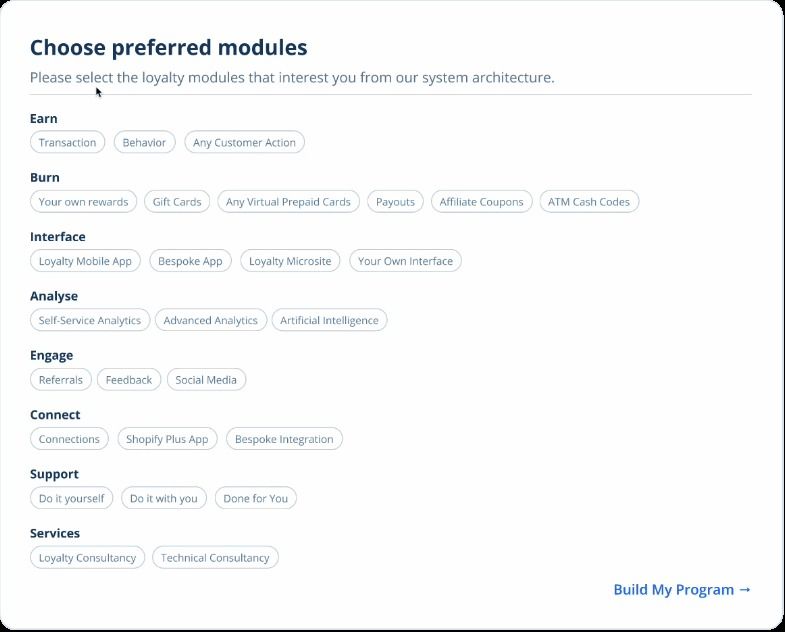
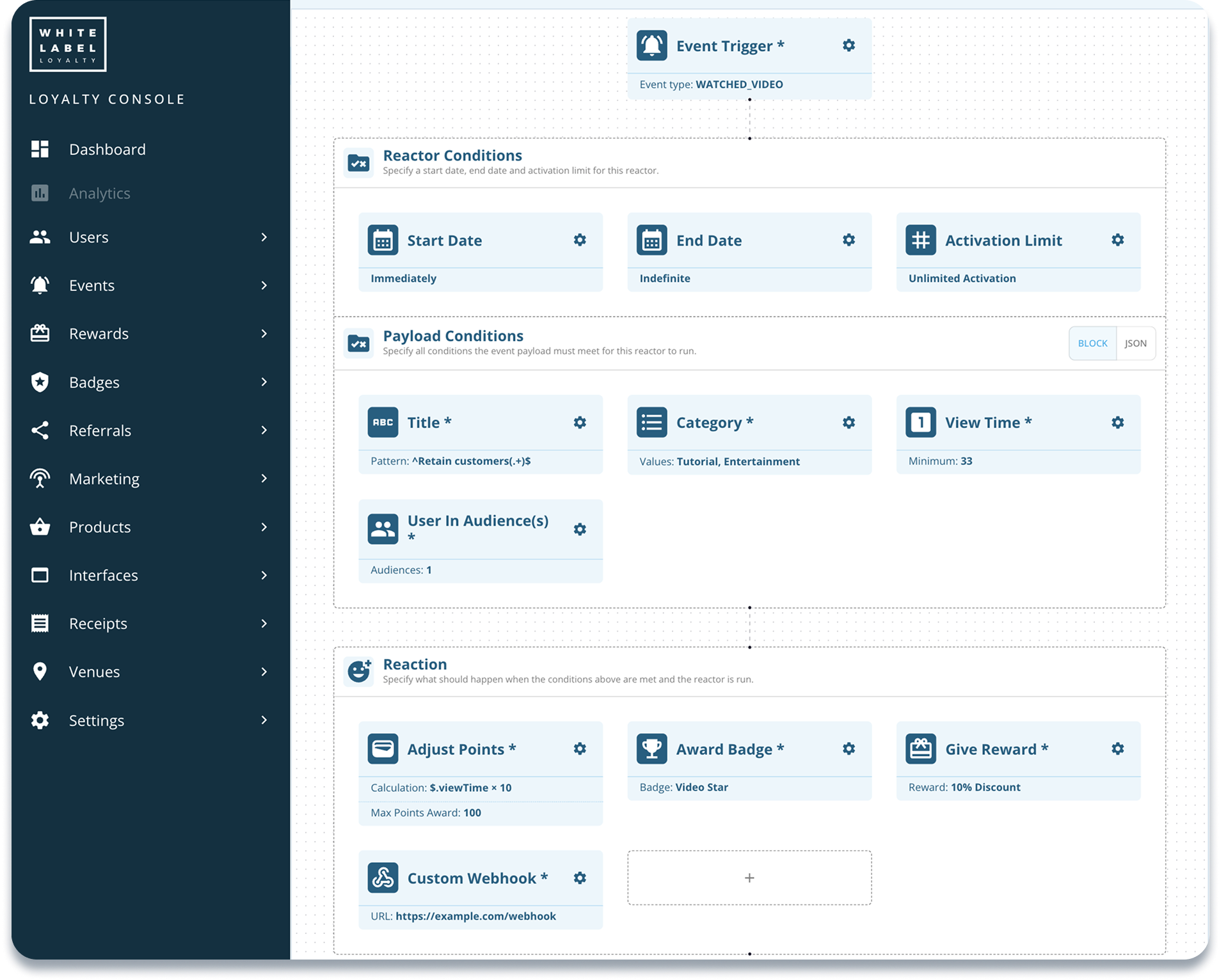
Event-based rewards engine: The core of the platform is its Reactor system — a configurable rules engine that defines any customer action as a loyalty trigger. For subscription businesses, this means rewarding monthly renewals, onboarding completion, feature adoption milestones, referrals, and renewal anniversaries without requiring custom development for each new rule.
AI lifecycle intelligence: The AI module evaluates churn probability and predicted lifetime value daily at the individual user level. It automatically categorises customers into journey stages: Activate, Nurture, Grow, Retain, and Win Back. Retention offers can be triggered automatically when a subscriber's churn score crosses a threshold.
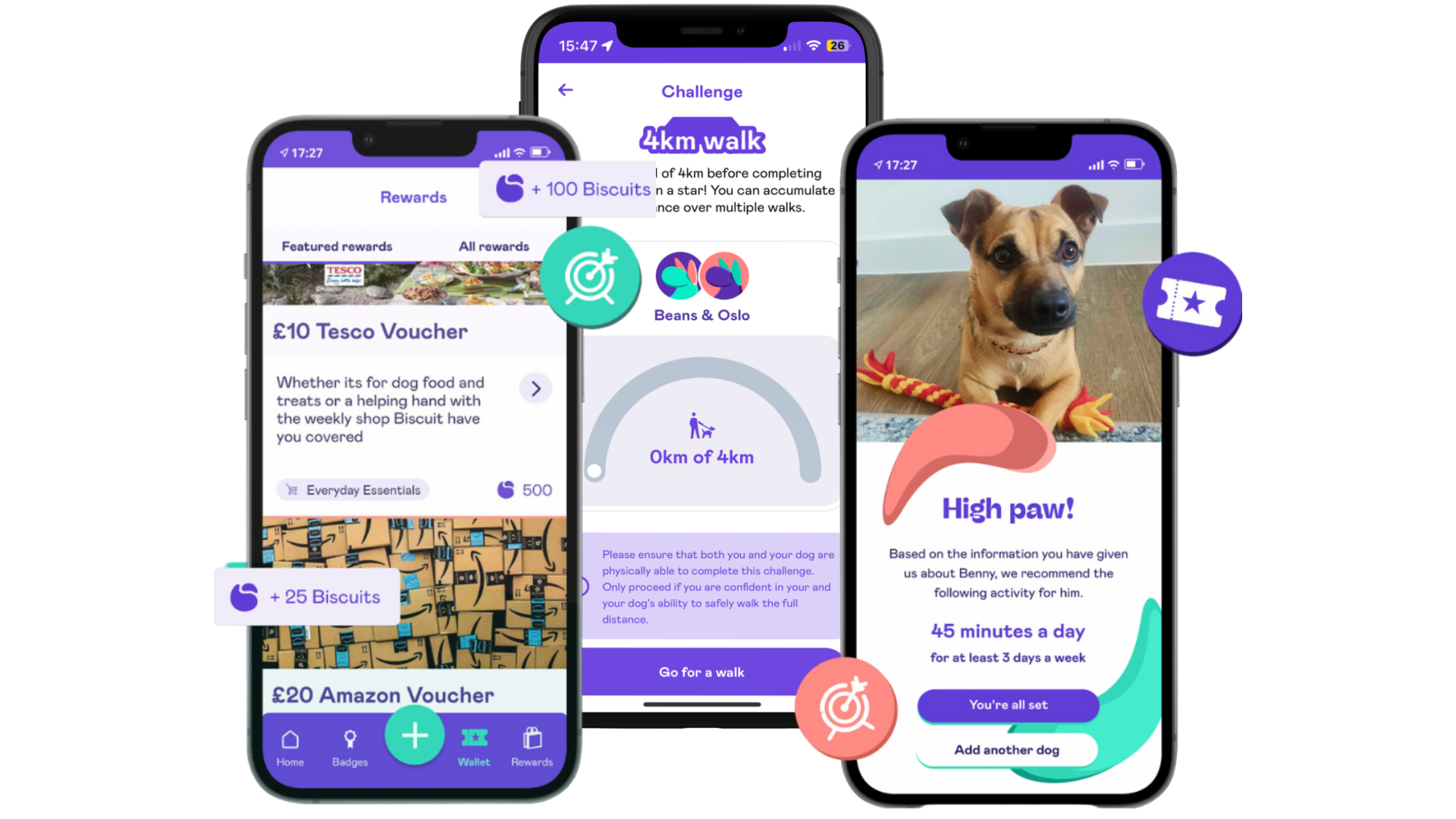
Headless API and SDK: White Label Loyalty offers Dynamo, a headless loyalty API and SDK with sandbox access available without a mandatory sales call. The Biscuit case study illustrates this: the pet rewards app reached 50,000 users in nine months with a 4.6-star App Store rating using the API to embed gamified loyalty mechanics without significant development overhead.
Considerations: Designed for mid-size to enterprise businesses. The platform claims 10x faster launch times than custom builds, though this varies by integration complexity. Modular pricing means you pay for capabilities you actually use.
2. Antavo
Best for: Large retail-subscription hybrids, subscription box businesses, and enterprises where marketing teams need to manage loyalty without constant developer involvement.
Antavo is an enterprise loyalty platform with particular depth in no-code rule configuration. Program managers can adjust earning rules, tier structures, and reward logic without developer support, a genuine operational advantage for teams running frequent campaign changes.
Antavo supports complex tier structures and gamification mechanics well. Its reporting suite is robust and it handles experiential rewards, which matters for subscription brands differentiating their loyalty offering. It is a solid fit for subscription box businesses and retail-membership hybrids where the purchase event still anchors the program.
Limitations: Architecture is primarily retail-oriented. Subscription-specific mechanics are achievable but require more configuration effort than platforms purpose-built for recurring revenue. AI churn prediction is available in basic form but does not match the depth of dedicated AI platforms.
3. Talon.One
Best for: SaaS companies whose primary loyalty challenge is managing complex promotional logic (layered discounts, coupon campaigns, and referral mechanics) alongside a loyalty program.
Talon.One is built around rule-based promotion and campaign management. Its API is well-documented and its campaign rules engine is one of the most flexible in the market for businesses running sophisticated discount and incentive structures alongside loyalty.
Where subscription businesses run tiered pricing, upgrade incentives, or complex referral discount stacks, Talon.One handles the logic cleanly. It integrates well into existing billing and CRM stacks.
Limitations: More accurately a promotion engine than a loyalty platform in the traditional sense. Lacks native churn prediction and non-purchase event support is present but not the primary design focus. A mandatory sales call is required to get started, adding friction for technical teams wanting to evaluate quickly.
4. Open Loyalty
Best for: Engineering-heavy teams that want complete control over loyalty infrastructure, with no vendor lock-in and full customisation of earning rules, segmentation, and reward mechanics.
Open Loyalty is a headless, open-source loyalty engine. You can self-host or run on cloud infrastructure, and build entirely custom rules from the ground up. It is the most technically flexible option in this comparison.
For subscription businesses with strong in-house engineering teams, Open Loyalty offers customisation that proprietary platforms cannot match. Every aspect of the earning model, tier structure, and reward catalogue can be built to specification, with full codebase transparency and no vendor lock-in.
Limitations: Requires significant internal engineering resource to implement and maintain. No managed AI layer, no out-of-the-box churn prediction, and no no-code interface for marketing teams. For subscription businesses without a dedicated engineering team, the operational overhead is likely to outweigh the flexibility benefit.
5. Annex Cloud
Best for: Large enterprises where community advocacy, user-generated content, and referral programs are as important as transactional retention mechanics.
Annex Cloud combines loyalty with referral, UGC, and advocacy in a multi-product suite. It is a distinctive offering for subscription businesses with an active and vocal customer community where word-of-mouth acquisition and brand advocacy are strategic priorities.
The referral and advocacy toolkit is Annex Cloud's strongest differentiator. It offers capabilities that more retention-focused platforms do not match for community-led subscription brands.
Limitations: No self-service or sandbox access; implementation is enterprise-only and time-intensive. Subscription-specific mechanics like churn-triggered win-back offers are limited. Entry cost is high, making it difficult to justify unless advocacy is a core strategic pillar.
Evaluating White Label Loyalty for your subscription business? The Dynamo API gives you sandbox access to the full platform, no sales call required. You can test the event-based engine, explore the AI lifecycle module, and run a proof of concept against your own use case before any commercial conversation.
Platform comparison: Loyalty solutions for subscriptions
The table below maps each platform against the capabilities that matter most for subscription businesses. Where a capability requires significant custom configuration or is only available on higher tiers, that's noted.
| Feature | White Label Loyalty | Antavo | Talon.One | Open Loyalty | Annex Cloud |
| Event-based engine | Core feature | Yes | Promo-focused | Yes (custom) | Limited |
| AI churn prediction | Daily per-user | Basic | No | No | Limited |
| Headless API / SDK | Dynamo SDK | Yes | Yes | Yes | Enterprise only |
| No-code config | Yes | Strong | Moderate | No | Limited |
| Sandbox / self-serve | Yes (Dynamo) | No | No | Yes | No |
| B2B and B2C | Both | B2C focus | Both | Both | Both |
| GDPR compliance | Yes | Yes | Yes | Yes | Yes |
| Subscription mechanics | Native | Adaptable | Adaptable | Custom build | Limited |
| Time to launch | Fast | Medium | Medium-long | Long | Long |
Subscription-specific loyalty mechanics: platform coverage
Beyond platform-level features, the mechanics matter. This table maps the specific loyalty triggers and program structures that subscription businesses rely on (renewal rewards, churn win-backs, engagement milestones, and lifecycle-based personalisation) against what each platform actually supports out of the box versus what requires custom build.
| Loyalty Mechanic | White Label Loyalty | Antavo | Talon.One | Open Loyalty | Annex Cloud |
| Reward on renewal | Yes | Yes | Via rules | Custom | No |
| Upgrade / upsell incentives | Yes | Yes | Yes | Custom | Partial |
| Referral program | Yes | Yes | Yes | Yes | Strong |
| Engagement milestones | Yes | Yes | Partial | Yes | Partial |
| Churn win-back offers | AI-automated | Manual | Rule-based | Custom | No |
| Pause subscriber status | Yes | Partial | No | Custom | No |
| Anniversary rewards | Yes | Yes | Yes | Yes | Partial |
| Gamified challenges | Yes | Yes | Partial | Yes | Partial |
| Engagement-based tiers | Yes | Yes | Partial | Yes | Yes |
| Lifecycle personalisation | AI-driven | Moderate | Partial | Custom | Partial |
Membership loyalty program examples across subscription models
Real-world examples help illustrate how loyalty mechanics translate across different subscription business types:
- Fintech and financial services: NerdWallet (a White Label Loyalty client) rewards users for completing financial health actions, activating products, and hitting account milestones, reinforcing feature adoption rather than simply rewarding spend.
- Pet care apps with recurring revenue: Biscuit, a UK rewards app built on the White Label Loyalty API, reached 50,000 users in nine months by embedding gamified loyalty mechanics, walking milestones, quests, XP challenges, directly into the app experience.
- Subscription box businesses: Subscription box brands often use tiered loyalty to reward tenure and referrals. A subscriber active for 12 months who has referred two friends occupies a materially different relationship than a first-month subscriber, tiered mechanics make that visible and valuable.
- Enterprise B2B SaaS: B2B loyalty programs typically reward account-level activity: training completion, feature adoption, case study participation, and referrals. White Label Loyalty and Open Loyalty both support B2B program structures.
Frequently Asked Questions (FAQs)
Conclusion
There is no single best loyalty platform for subscription businesses: there is the best platform for your specific business model, technical capability, and retention challenge.
White Label Loyalty is the most complete solution for subscription businesses that need AI-driven churn prediction, engagement-based rewarding, and native API integration. Most platforms adapt transactional logic to subscriptions; few are built event-first like White Label Loyalty.
Antavo is a good option for retail-subscription hybrids with marketing-led program management. Talon.One suits SaaS businesses whose loyalty challenge is primarily promotional complexity. Open Loyalty gives engineering-heavy teams full infrastructure ownership. Annex Cloud is valuable where advocacy and community are the primary retention lever.
Ready to see how White Label Loyalty handles your specific subscription model? Most loyalty platforms will show you a generic demo.
White Label Loyalty's team works with subscription businesses across SaaS, fintech, apps, and FMCG, so it's worth having a conversation grounded in your actual retention challenge, not a standard product walkthrough - so book a demo now!
Recommended Posts
If you enjoyed this article, check out these relevant posts below.
Share this Article

Sara Rabolini
Senior Content Marketing Executive
Sara is our Senior Content Marketing Executive. She shares engaging and informative content, helping businesses stay up-to-date with the latest trends and best practices in loyalty...