Loyalty Trends 2026: How Customer Loyalty Is Evolving
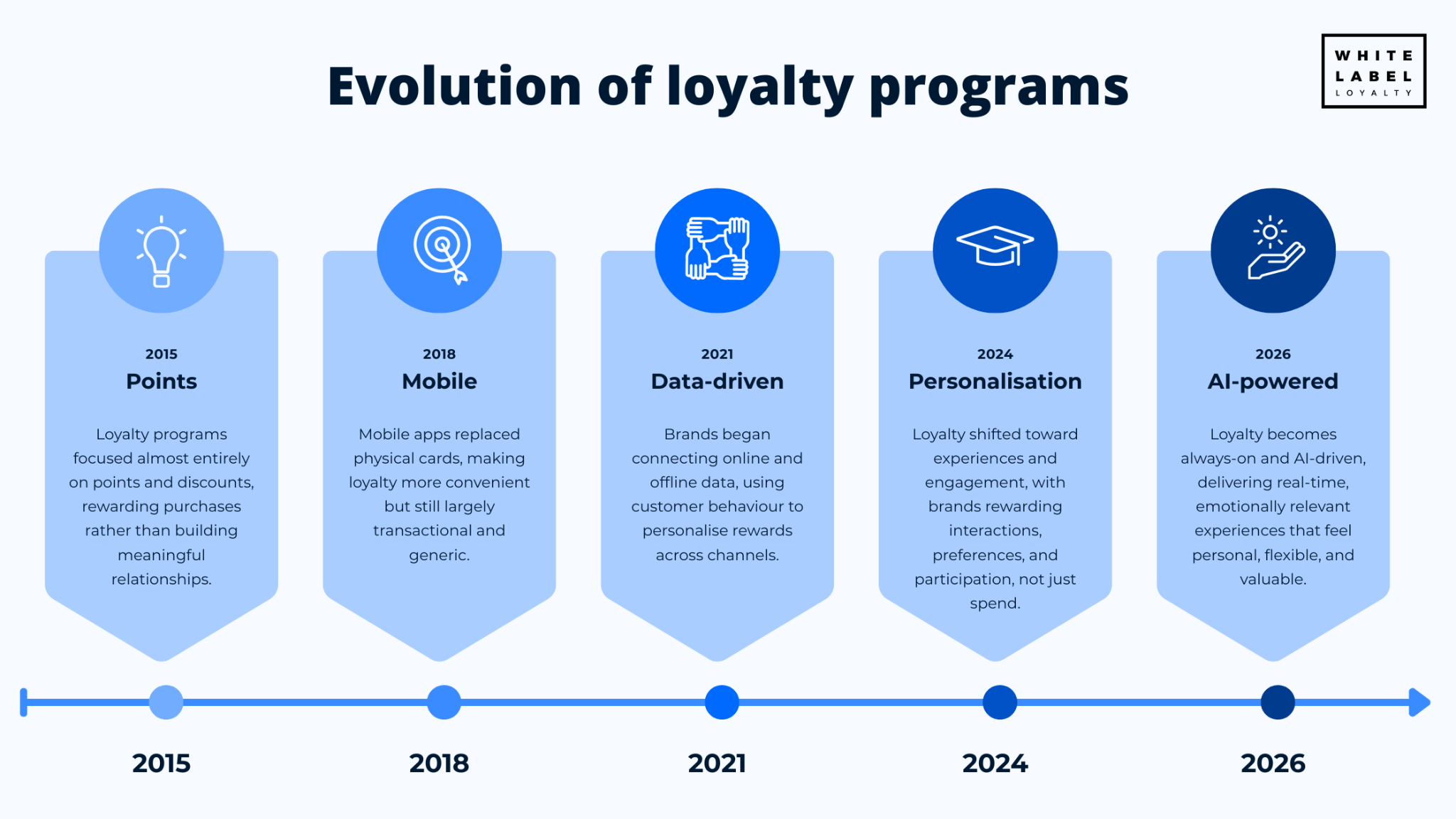
As customer expectations rise and privacy regulations reshape digital marketing, loyalty program trends for 2026 mark a clear shift away from traditional, points-based schemes toward more intelligent, flexible, and data-driven engagement models.
Loyalty in 2026 is defined by a shift from points-based rewards to emotional and experiential loyalty. This new loyalty paradigm emphasizes personalized, emotionally engaging experiences powered by advanced technology, such as AI and predictive analytics, and a comprehensive omnichannel approach that treats customers as individuals.
In practice, successful loyalty strategies in 2026 focus less on transactions and more on relevance, trust, and continuous engagement. Loyalty programs are evolving to prioritize emotional connections over traditional points-based systems.
Notably, the global loyalty management market is projected to surpass $18.2 billion by year-end 2026, underlining just how strategic loyalty has become. This article, designed for marketing leaders, loyalty program managers, and business strategists, explores the most important loyalty program trends shaping the year ahead and what brands need to do to stay competitive.

By offering unexpected perks, experiential rewards, or themed experiences tied to specific dates, brands can foster a sense of anticipation and delight, strengthening emotional connections with their loyalty program members and driving consistent program participation throughout the year.
TL;DR - Loyalty program trends for 2026
- AI-powered personalization is now the standard, not a differentiator
- Zero-party and first-party data replace third-party tracking
- Flexible, instant rewards outperform rigid point systems
- Loyalty ecosystems and partnerships drive more value than standalone programs
- Purpose-driven and values-based rewards influence customer loyalty
- Simplicity, clarity, and speed to value matter more than feature overload
Top 9 loyalty trends for 2026
Forget points and punch cards. The loyalty programs winning in 2026 focus on real-time personalization, instant rewards, and meaningful experiences. These trends show how brands can turn everyday interactions into long-term loyalty.
1. AI-powered personalization becomes the standard
Modern loyalty platforms use artificial intelligence to analyze customer behavior in real time and deliver relevant rewards, offers, and communications based on individual preferences rather than broad segments.
With AI and unified customer profiles, brands can deliver personalized experiences and tailored content, offers, and interactions automatically, ensuring each customer receives dynamic, predictive engagement across all channels.
AI and predictive analytics enable individualized experiences at scale, using real-time data to tailor offers and create smarter, more relevant customer journeys.
AI helps loyalty programs move from static campaigns to dynamic, behavior-driven engagement. Instead of rewarding customers only after purchases, brands can recognize actions such as browsing, sharing content, visiting locations, or engaging on social media.
How brands are applying it
- Predictive churn prevention
- Real-time reward triggers
- Personalized reward catalogs
- Dynamic tier progression for tiered loyalty programs
- Automating omnichannel engagement with dynamic, personalized messaging
With 91% of consumers now preferring brands that offer personalized content and rewards, brands that fail to invest in AI-driven personalization risk falling behind.
Why this loyalty trend matters
Customers now expect brands to deliver personalized experiences that anticipate their needs and preferences. Loyalty programs that fail to personalize experiences risk lower engagement, higher churn, no emotional connection and a reduced lifetime value.
2. Zero-party data becomes loyalty’s most valuable asset
With third-party cookies disappearing and privacy regulations tightening, loyalty programs have become one of the most effective tools for collecting zero-party and first-party data.
Zero-party data is information that customers willingly and proactively share, such as preferences, intentions, and interests, in exchange for clear value.
Loyalty programs are evolving into trusted data exchange mechanisms, where customers understand why data is collected and how it improves their experience.
Why this loyalty trend matters
Brands that rely on opaque tracking methods are losing visibility. Loyalty programs offer a compliant, transparent way to gather high-quality customer insights.
Key examples
- Preference-based rewards
- Interactive surveys and quizzes
- Personalized onboarding journeys
- Explicit consent-based data capture
3. Flexible rewards replace rigid point systems
One of the clearest loyalty program trends for 2026 is the decline of rigid, points-only models. Flexibility in rewards and redemption options has become table stakes for loyalty programs, as brands must now offer adaptable and diverse reward choices to stay competitive. Customers increasingly want choice, immediacy, and relevance, not long accumulation cycles or complex redemption rules.
Customers also expect instant rewards and frictionless redemption across multiple channels, including mobile apps and in-store environments.
What customers expect instead
- Instant rewards
- Cashback or discounts
- Digital gift cards
- Mobile apps as a primary platform for loyalty engagement and instant rewards
- Unique in store experiences as a form of experiential reward
- Experiences and access-based perks
- Charitable or purpose-driven rewards
Why flexibility wins
Flexible rewards reduce friction and increase perceived value. When customers can choose how and when they’re rewarded, engagement and satisfaction increase.
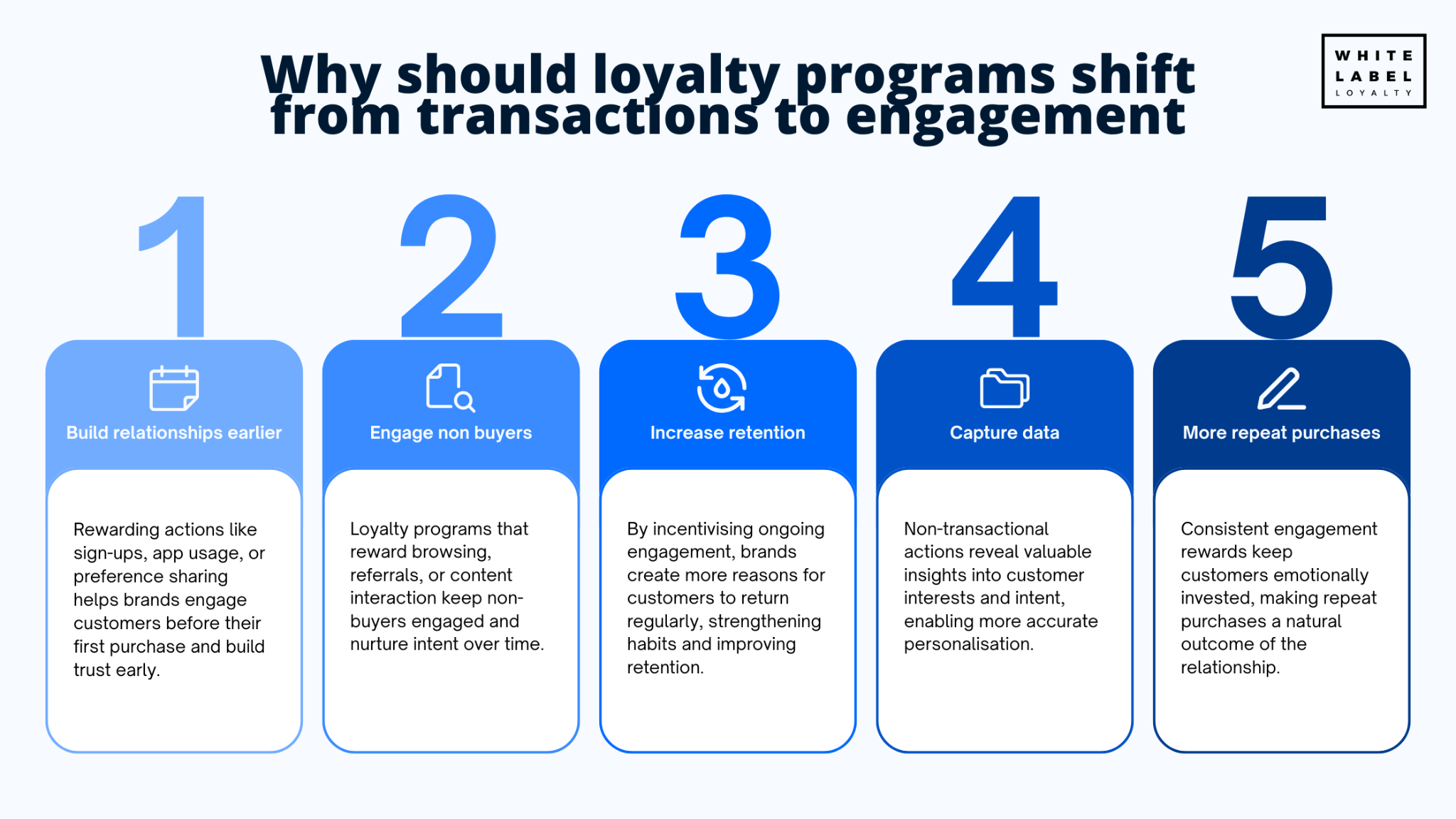
4. Loyalty programs shift from transactions to engagement
In 2026, leading programs reward engagement behaviors, such as app usage, content interaction, social engagement, reviews and referrals, and brand advocacy.
Emotional engagement and emotional value are now central to building lasting customer relationships and boosting engagement, as brands recognize that emotional loyalty drives 65% more repeat purchases than traditional point systems.
To engage customers and boost engagement, brands are increasingly using gamification elements such as challenges and leaderboards, which significantly increase customer interaction and participation.
Loyalty programs now operate as engagement engines, not just revenue trackers.
Business impact in this loyalty landscape
Rewarding non-transactional actions allows brands to:
- Build relationships earlier in the customer journey
- Engage non-buyers
- Increase frequency and retention
- Capture richer behavioral data
- Drive more repeat purchases by incentivizing ongoing engagement
5. Ecosystem and partner-based loyalty gains momentum
Standalone loyalty programs are losing ground to ecosystem-based loyalty models.
In 2026, many brands, including financial institutions, are participating in ecosystem-based loyalty models to increase engagement and value. Brands increasingly collaborate with partners to allow customers to earn and redeem rewards across multiple brands, platforms, or industries.
Customers want loyalty programs that integrate naturally into their daily lives.
Examples of ecosystem loyalty
- Retail + fintech partnerships
- Travel + hospitality reward sharing
- Multi-brand reward marketplaces
The most successful loyalty programs are those that are personalized, experiential, and community-driven, such as Nike's Member Days, Sephora's beauty community, and Rapha's cycling community, which engage members beyond simple discounts and evolve with customer preferences through tiered rewards and non-transactional experiences.
6. Purpose-driven loyalty influences customer choice
Purpose and values play a growing role in customer loyalty decisions, especially among younger demographics. Ethical loyalty and emotional bonds are becoming central to purpose-driven loyalty programs, as customers increasingly seek brands that align with their values and foster genuine connections.
In 2026, many loyalty programs incorporate social impact, sustainability, and ethical rewards into their value proposition. Brands are increasingly offering eco-friendly rewards and options for sustainable choices to appeal to consumers' values.
Common purpose-driven loyalty features
- Donating rewards to charities
- Supporting environmental initiatives
- Incentivizing sustainable behaviors
- Community-based engagement
Purpose-driven loyalty builds emotional connection, not just transactional loyalty. Customers are more likely to stay loyal to brands that reflect their values.
7. Status matching and tier fluidity
To compete for high-value customers, brands are adopting status matching and more flexible tier structures.
Offering early access to sales and promotions is becoming a valuable benefit in tiered loyalty programs, enhancing exclusivity and encouraging customer engagement.
Customers can transfer or fast-track loyalty status earned elsewhere, reducing friction when switching brands.
Business benefit of these loyalty strategies
Status matching accelerates loyalty adoption and makes programs more competitive in saturated markets.
Brands are increasingly shifting from focusing solely on reward spend to building long-term customer relationships through holistic loyalty strategies, including non-monetary benefits and value-driven engagement.
8. Simplicity and transparency
After years of overly complex loyalty mechanics, 2026 marks a return to clarity and simplicity. Complexity is no longer a competitive advantage: usability is.
Customers want clear earning rules, simple redemption, visible progress, and immediate recognition.
Brands benefit from:
- Higher participation rates
- Lower operational costs
- Easier communication and onboarding
9. Speed to value becomes a competitive advantage
Customers no longer want to “wait” to feel rewarded. In 2026, successful loyalty programs deliver early value, such as welcome rewards, instant perks, and early milestone recognition. Subscription-based loyalty programs are especially effective at providing early value, as members receive instant perks and exclusive benefits as soon as they join.
This creates momentum and reinforces engagement from the first interaction.
How brands should prepare for the future of loyalty
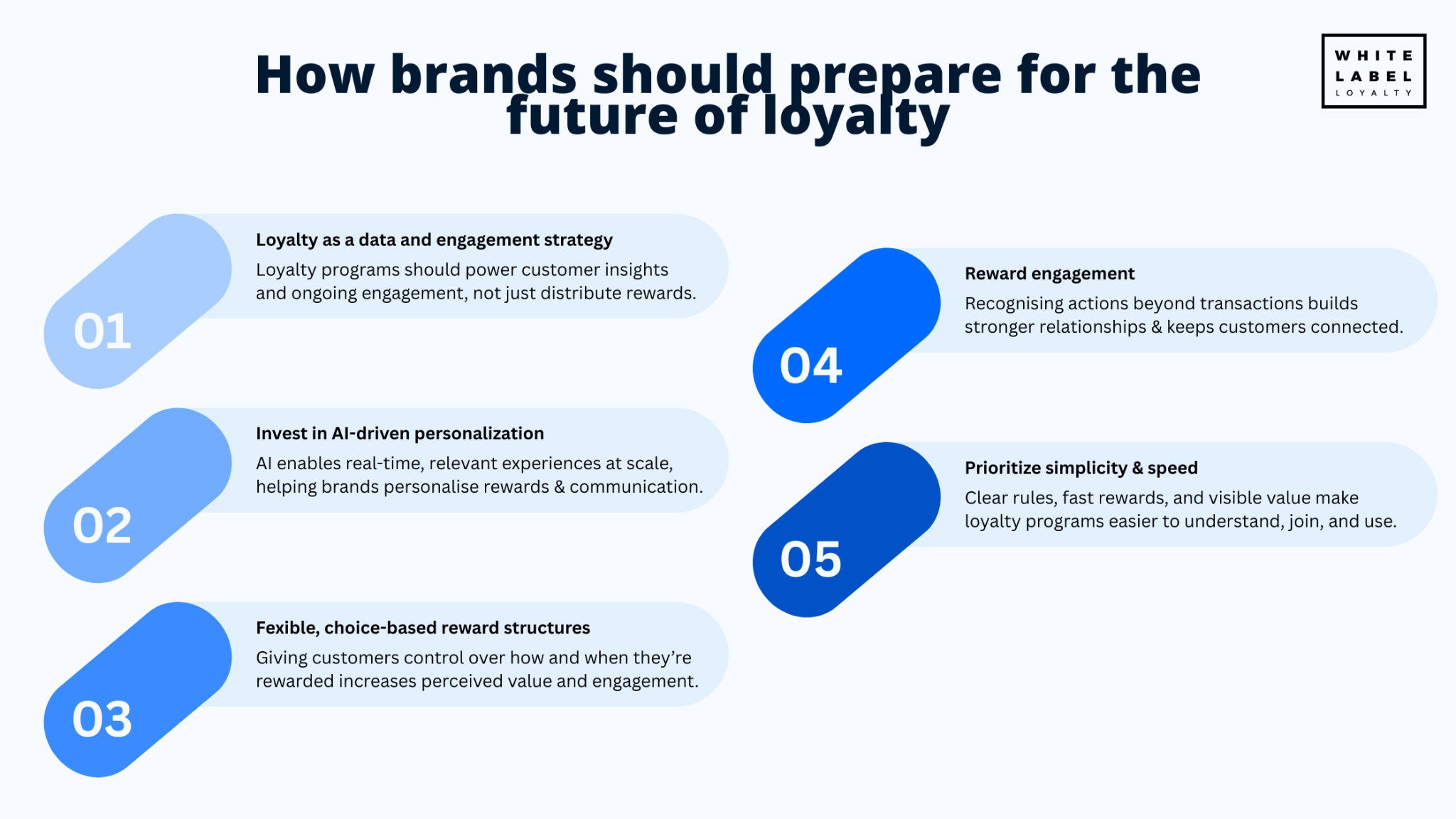
To stay competitive in 2026 and beyond, brands should recognize that building lasting relationships and prioritizing emotional connection are essential for achieving long-term value.
- Treat loyalty as a data and engagement strategy, not just a rewards program
- Invest in AI-driven personalization capabilities
- Design flexible, choice-based reward structures
- Reward engagement, not just purchases
- Prioritize simplicity, speed, and transparency
Conclusion
In 2026, loyalty programs are all about delivering relevant experiences, earning customer trust, and creating meaningful value exchanges.
True loyalty is built through exceptional customer experience and emotional connection, encouraging customers to remain loyal beyond just transactional rewards. Loyal customers are essential for long-term growth, as they drive repeat purchases and foster deeper brand relationships.
Brands that embrace AI-powered personalization, first-party data, flexible rewards, and ecosystem thinking will build stronger customer relationships and long-term growth. Those that cling to outdated, transactional models risk being left behind.
Frequently Asked Questions (FAQs)
Recommended Posts
If you enjoyed this article, check out these relevant posts below.
Share this Article

Sara Rabolini
Content Marketing Executive
Sara is our Content Marketing Executive. She shares engaging and informative content, helping businesses stay up-to-date with the latest trends and best practices in loyalty...