Best Customer Loyalty Platforms for Businesses
Customer loyalty platforms help businesses increase retention, boost customer lifetime value and drive repeat purchases through rewards, personalization, and data-driven engagement.
This guide compares the best customer loyalty platforms for businesses, including features, use cases, and how to choose the right solution.
TL;DR: what are the best customer loyalty platforms?
The best customer loyalty platforms for businesses in 2026 depend on your level of complexity, technical resources, and growth stage.
- For enterprise and complex loyalty strategies: White Label Loyalty and Talon.One offer the highest flexibility, scalability, and customization.
- For ecommerce brands and faster deployment: LoyaltyLion, Yotpo Loyalty & Referrals, and Klaviyo provide easier setup and strong integrations with existing marketing tools.
- For small businesses and simple programs: Smile.io enables quick, low-cost launches with minimal technical overhead.
Key difference at a glance
- Platforms like Smile.io and LoyaltyLion prioritize ease of use and speed
- Platforms like Talon.One and Capillary focus on technical control and personalization
- Platforms like White Label Loyalty sit in between, offering enterprise-grade flexibility without being fully developer-dependent
How customer loyalty platforms work
At a basic level, loyalty platforms track customer behavior and trigger rewards based on predefined actions. These actions can include purchases, referrals, app usage, or engagement with marketing campaigns.
For example, a retail brand might:
- Award points for every purchase
- Offer bonus rewards for repeat visits
- Unlock VIP tiers based on spending
More advanced platforms use event-based triggers, meaning they can reward any customer action, not just transactions. This allows brands to incentivize behaviors like app downloads, product reviews, or in-store visits.
Why loyalty platforms matter in 2026
As privacy regulations tighten and third-party cookies disappear, businesses are shifting toward first-party data strategies. Loyalty platforms play a critical role in this transition by helping brands:
- Collect and activate customer data
- Deliver personalized experiences
- Build long-term engagement beyond discounts
Instead of relying on short-term promotions, companies can now create sustainable loyalty ecosystems that drive consistent revenue growth.
Top 5 customer loyalty platforms (compared)
Platform | Best for | Key strength | Flexibility | Ease of setup | Business size |
| White Label Loyalty | Enterprise & custom programs | Event-based, modular loyalty | ⭐⭐⭐⭐⭐ | ⭐⭐⭐⭐⭐ | Large enterprises |
| Talon.One | API-driven customization | Rule-based promotions engine | ⭐⭐⭐⭐⭐ | ⭐⭐ | Enterprises with dev teams |
| Capillary Technologies | AI personalization | Data-driven engagement | ⭐⭐⭐⭐ | ⭐⭐⭐ | Large enterprises |
| LoyaltyLion | Ecommerce | Fast setup & integrations | ⭐⭐⭐ | ⭐⭐⭐⭐⭐ | SMB–mid market |
| Yotpo Loyalty | Engagement & UGC | Reviews + loyalty integration | ⭐⭐⭐ | ⭐⭐⭐⭐ | Ecommerce brands |
| Smile.io | Small businesses | Simplicity & affordability | ⭐⭐ | ⭐⭐⭐⭐⭐ | SMBs |
| Klaviyo | CRM-driven marketing | Email/SMS + loyalty data | ⭐⭐⭐ | ⭐⭐⭐⭐ | SMB–mid market |
| Annex Cloud | Loyalty + advocacy | Referrals & UGC | ⭐⭐⭐⭐ | ⭐⭐⭐ | Mid–enterprise |
1. White Label Loyalty - Best for enterprise-grade & custom programs
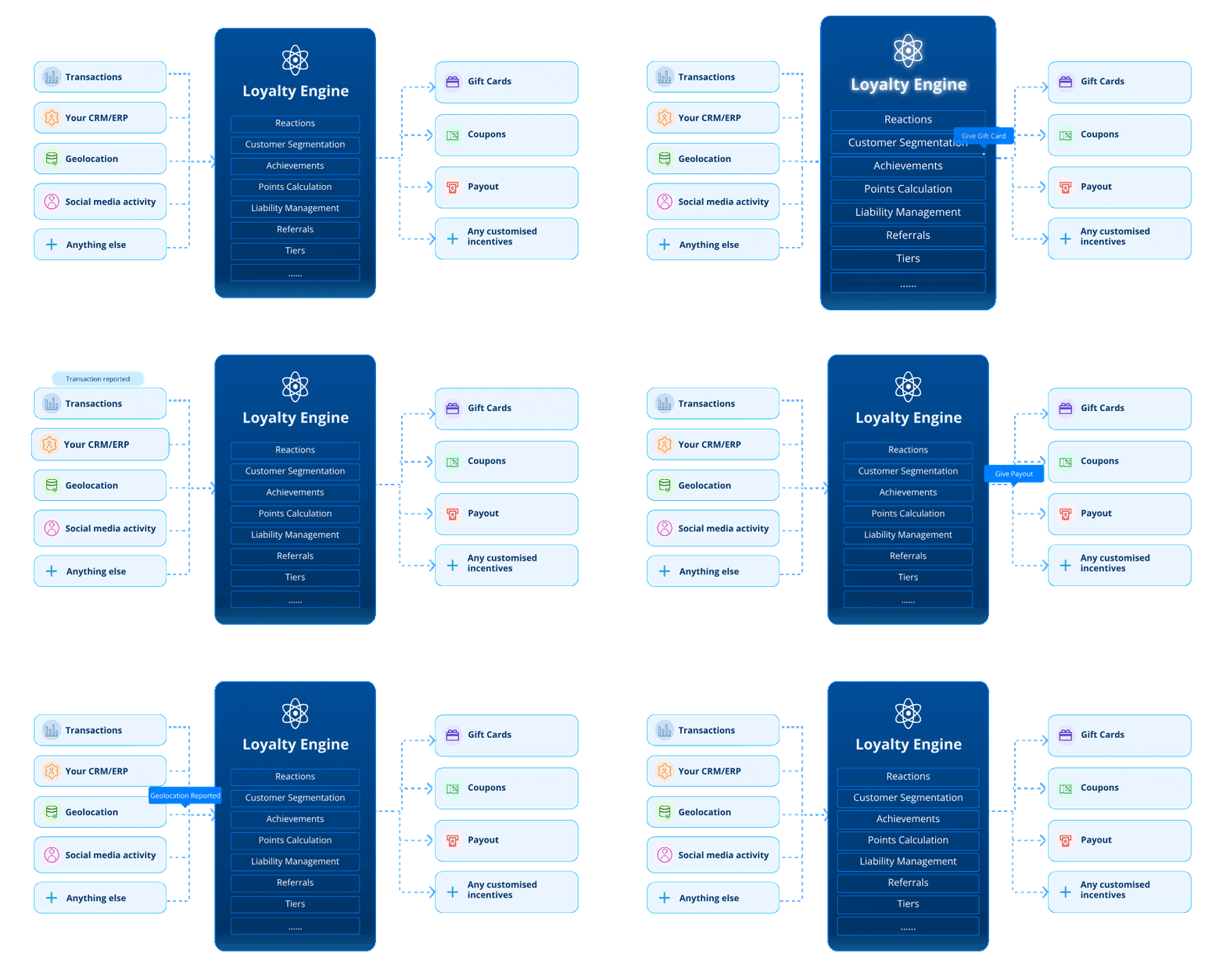
White Label Loyalty is a modular, event-based loyalty platform designed for brands that need flexibility, scalability, and deep customer insights.
Key features:
- Fully customizable rewards (points, tiers, behaviors)
- Event-based loyalty engine (reward any action)
- Advanced segmentation and analytics
- Omnichannel integration (POS, CRM, apps, data warehouses)
Why it stands out: Unlike plug-and-play solutions, White Label Loyalty allows businesses to design loyalty programs around specific customer behaviors, not just transactions.
For example, a QSR brand could reward app downloads, repeat visits within a timeframe, specific product purchases, and engagement with campaigns.
This flexibility makes it ideal for brands running complex, multi-market loyalty strategies, where personalization and data activation are key differentiators, but not a great fit for small businesses.
2. LoyaltyLion - Best for Ecommerce
LoyaltyLion is a loyalty platform built specifically for ecommerce brands, particularly those on Shopify and BigCommerce.
Key features:
- Points, referrals, and VIP tiers
- Seamless ecommerce integrations
- Real-time customer insights
LoyaltyLion is designed for fast implementation and ease of use, making it a good choice for mid-sized ecommerce brands with relatively straightforward loyalty needs. Its templated approach may limit flexibility for businesses that require more advanced, behavior-based or omnichannel loyalty strategies.
3. Talon.One — Best for API-driven customization
Talon.One is a platform that enables businesses to create customized loyalty and promotion logic through APIs.
Key features:
- Rule-based incentive engine
- Real-time decisioning
- Developer-first architecture
Ideal for organizations with dedicated technical resources that want full control over loyalty mechanics and promotional rules. Its flexibility often comes with higher implementation complexity and reliance on engineering teams.
4. Yotpo Loyalty & Referrals - Best for engagement
Yotpo combines loyalty with reviews, SMS, and user-generated content, creating a unified engagement ecosystem.
Key features:
- Rewards for reviews and social actions
- Integrated SMS and email marketing
- Strong personalization tools
It connects loyalty with social proof, helping brands increase engagement and trust through reviews and referrals. It is primarily optimized for ecommerce use cases and may be less suited for complex, multi-channel enterprise environments.
5. Capillary Technologies — Best for AI-powered personalization
Capillary Technologies provides an enterprise loyalty platform with strong capabilities in AI-driven engagement.
Key features:
- AI-powered recommendations
- Omnichannel program management
- Campaign automation
It enables large organizations to deliver personalized experiences at scale, and it's best for enterprises prioritizing data-driven marketing and personalization. Customization and program flexibility may depend on predefined frameworks compared to more modular platforms.
6. Smile.io — Best for small businesses
Smile.io offers a simple and accessible loyalty platform designed for small and medium-sized businesses.
Key features:
- Points-based rewards and VIP tiers
- Easy setup and integrations
- Affordable pricing plans
Smile.io prioritizes simplicity and usability, allowing small teams to launch a loyalty program without technical complexity. While it lacks some advanced features, it provides everything needed to build an entry-level loyalty program.
7. Klaviyo Loyalty — Best for data-driven marketing
Klaviyo integrates loyalty features into its CRM and marketing automation platform.
Key features:
- Behavioral segmentation
- Automated email and SMS campaigns
- Personalized reward triggers
Klaviyo is powerful for brands already investing in data-driven marketing. Loyalty functionality is part of a broader marketing ecosystem and may not offer the same depth as dedicated loyalty platforms.
While many loyalty platforms offer strong capabilities within specific use cases, enterprise businesses with complex, omnichannel strategies often require more flexible, event-based solutions.
Best customer loyalty platforms by business type
For enterprise businesses:
- White Label Loyalty
- Talon.One
- Capillary Technologies
- SAP Emarsys
For ecommerce brands:
- LoyaltyLion
- Yotpo Loyalty & Referrals
- Klaviyo
For small businesses:
- Smile.io
- Loopy Loyalty
Key features of the best loyalty platforms
While most platforms list similar features, the real difference lies in how effectively they support modern, behavior-driven loyalty strategies.
- Customizable reward systems allow brands to go beyond basic “earn and burn” models. Instead of just rewarding purchases, businesses can incentivize high-value behaviors like referrals, app engagement, or repeat visits within a timeframe.
- Omnichannel engagement ensures customers have a consistent experience across all touchpoints, whether they’re shopping online, in-store, or via mobile. This is critical for brands with both physical and digital presence.
- Customer analytics and segmentation turn raw data into actionable insights. Businesses can identify high-value segments, track engagement patterns, and tailor rewards to different customer groups.
- Automation and event-based triggers enable real-time interactions. For example, a customer can receive a reward instantly after completing a specific action, increasing relevance and engagement.
- CRM and marketing integrations connect loyalty data with broader marketing efforts, allowing for more personalized campaigns across email, SMS, and other channels.
- Scalability ensures the platform can support growth, from a few thousand users to millions, without compromising performance or flexibility.
Why these features matter in a customer loyalty software
These features allow businesses to move beyond simple discounting and build strategic, data-driven loyalty programs that influence customer behavior over time.
From transactions to customer retention
Traditional loyalty programs focus primarily on transactions, rewarding customers only when they spend. Modern platforms, however, enable brands to build ongoing relationships by rewarding a wider range of interactions.
For example: a customer might earn points for leaving a review, receive a bonus for returning within 7 days, and unlock exclusive perks after engaging with multiple channels.
This shifts loyalty from a cost center (discounting) to a growth driver (engagement and retention).
How these features drive results
Segmentation enables personalization: Instead of offering the same rewards to everyone, businesses can tailor incentives based on behavior, preferences, or value, increasing relevance and conversion rates.
Automation enables real-time engagement: Timely rewards and messages are far more effective than delayed campaigns. Automation ensures customers are engaged at the right moment.
Omnichannel support creates consistency: Customers expect seamless experiences across channels. A disconnected loyalty program can lead to friction and lost engagement.
How to choose the best loyalty platform
Choosing a loyalty platform is all about finding the right fit for your strategy, tech stack, and growth plans.
- Define your goals: Are you trying to increase repeat purchases, drive engagement, or collect first-party data? Your objectives will determine the type of platform you need.
- Identify key channels: If you operate across multiple touchpoints (e.g., ecommerce + retail), you’ll need a platform that supports true omnichannel engagement.
- Evaluate customization needs: Some platforms are plug-and-play, while others allow you to design fully tailored loyalty programs. Businesses with complex strategies typically need more flexibility.
- Check integrations: A loyalty platform should connect seamlessly with your CRM, marketing tools, and data systems. Poor integration can limit the value of your program.
- Assess analytics capabilities: Look for platforms that provide actionable insights, not just raw data. The ability to measure performance and optimize campaigns is critical.
- Consider scalability and pricing: Choose a solution that can grow with your business. Switching platforms later can be costly and disruptive.
Common pitfalls to avoid
Many businesses make the mistake of choosing a platform based on short-term convenience rather than long-term impact.
Avoid selecting tools that can’t scale with your growth, overlooking data and analytics capabilities, focusing only on price instead of value, and limiting loyalty to purchase-based rewards.
Conclusion
Simpler platforms can be effective for quick wins and straightforward programs, especially for ecommerce and small businesses. However, as customer expectations evolve and engagement becomes more complex, many organizations require more flexible solutions that go beyond basic, transaction-based rewards.
The most effective loyalty strategies today are behavior-driven, data-led, and omnichannel by design. They reward not just purchases, but meaningful interactions across the entire customer lifecycle, from first engagement to long-term retention.
Ultimately, the best customer loyalty platforms are those that enable brands to move from short-term incentives to long-term relationships.
Frequently Asked Questions (FAQs)
Recommended Posts
If you enjoyed this article, check out these relevant posts below.
Share this Article

Sara Rabolini
Content Marketing Executive
Sara is our Content Marketing Executive. She shares engaging and informative content, helping businesses stay up-to-date with the latest trends and best practices in loyalty...