First-Party Data for B2B Manufacturers: The 72% Illusion
Data is meant to be the competitive edge, and most B2B manufacturers believe they have plenty of it. In our recent research, 72% of B2B manufacturers said they own first-party customer data.
On paper, that sounds like digital maturity. In reality, it's an illusion.
We surveyed Ecommerce, Commercial and Marketing Directors at mid-market and enterprise B2B manufacturers across the UK, Europe and the US in March 2026. Look past the headline 72%, and a massive disconnect emerges between perceived ownership and practical usability.
The time and capability lost between receiving information and acting on it (what we call The Marketing Lag) is a commercial leak. And it's where competitors swoop in to capture market share.
Key takeaways
- 72% of B2B manufacturers say they have first-party access to end-customer transaction data, but only 9.7% can activate it in real time.
- 67.7% admit data activation takes months, or that they don't really know how to do it at all.
- Only 6% say they understand end-customer buying behaviour "extremely well"; 61.3% rate their understanding as "fairly well" at best.
- 78% of respondents say traditional trade marketing only drives short-term spikes, or fails to change behaviour altogether.
- The manufacturers closing this gap (typically through digital loyalty programs) are seeing measurable revenue impact within six months.
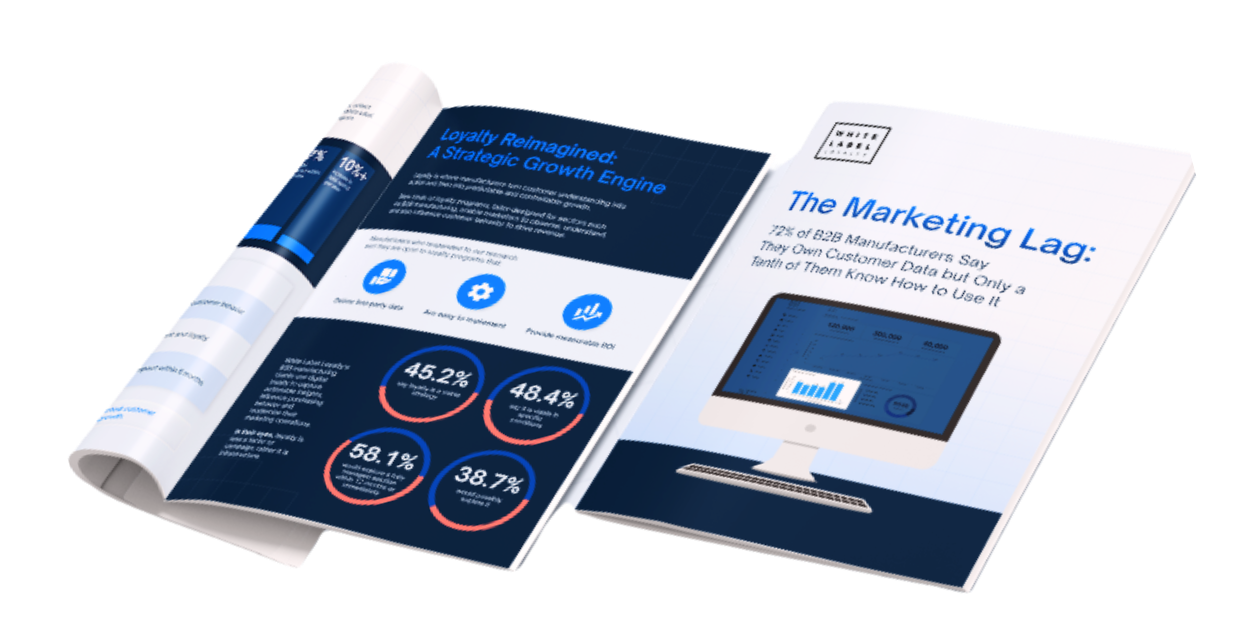
Read the full research
We surveyed Ecommerce, Commercial and Marketing Directors at mid-market and enterprise B2B manufacturers across the UK, Europe and the US. The full report covers:
- Where the data activation gap is widest, and why
- What forward-moving manufacturers are doing about it
- A full case study showing measurable revenue impact within six months
- A self-assessment to check whether your business is lagging
Download the full research: where the data activation gap is widest, what manufacturers are doing about it, and a case study showing measurable revenue impact within six months.
What does first-party data actually mean for B2B manufacturers?
The paradox of first-party data in manufacturing lies in how "ownership" is defined.
For many directors we surveyed, owning customer data means having access to sales reports, SKU movements, or periodic updates from distribution partners. But there's a world of difference between possessing a spreadsheet of last month's transactions and having a living, breathing connection with the end-customer.
The research lays out the data paradox clearly:
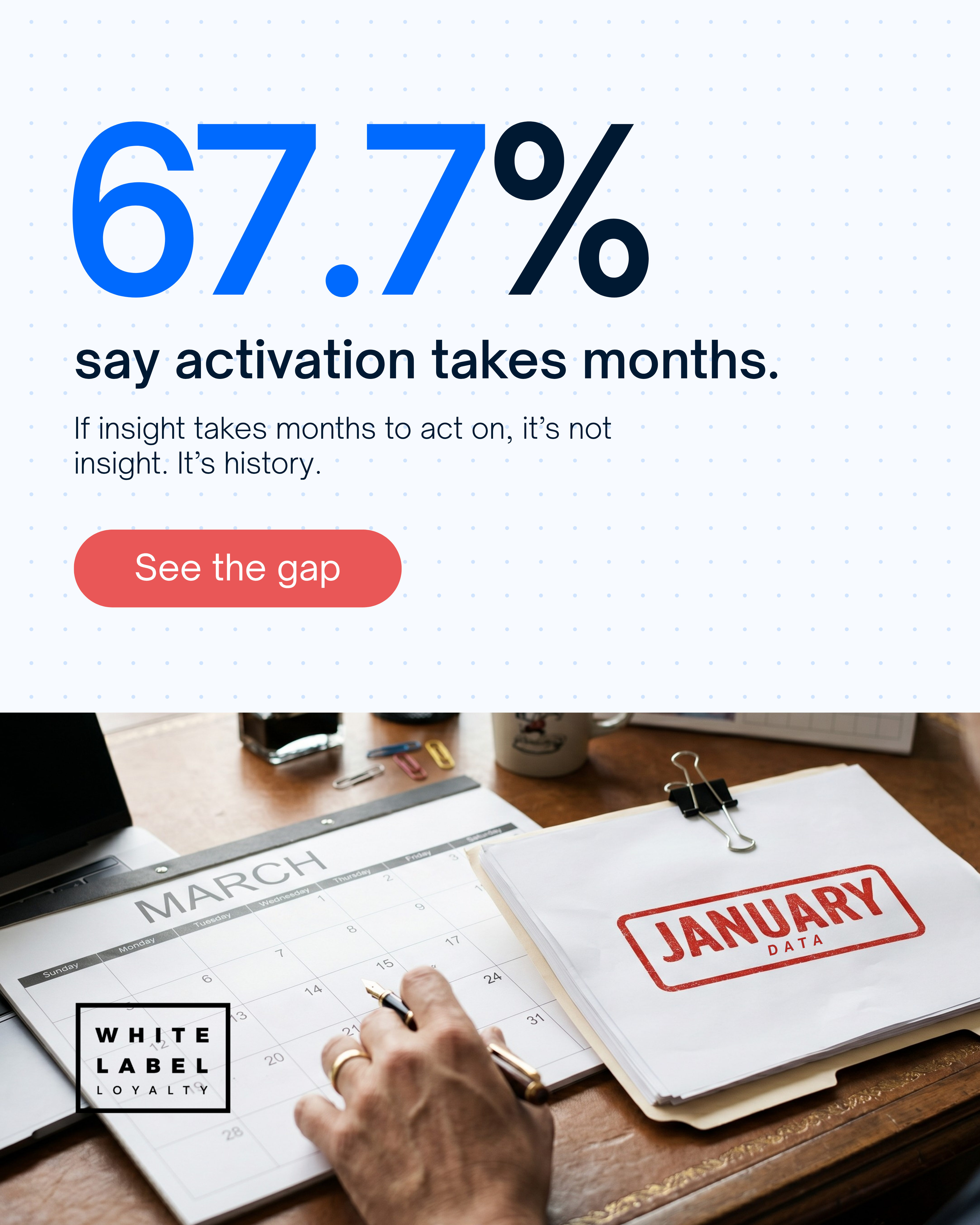
- The activation struggle. While 72% claim to own customer data, 67.7% admit activating it for campaigns or incentives either takes months or is a constant struggle.
- The knowledge gap. Only 6% of manufacturers say they understand end-customer behaviour "extremely well." 61.3% rate their understanding as "fairly well" at best.
- The real-time deficit. Fewer than 10% of respondents can activate customer data in real time.
If your data activation takes months, you aren’t influencing customer behaviour, you're performing an autopsy on it. By the time a campaign launches based on "old" data, the customer's needs, preferences and loyalty have already shifted elsewhere.
If you're interested in what first-party data means for any brand, check out our dedicated blog post.
The commercial risk of slow data activation
When 61.3% of manufacturers say they understand buying behaviour only "fairly well," the strategic foundation of the business is shaky.
If you're a B2B manufacturer in those numbers, the risks are tangible:
- You can't optimise promotions because you lack the granular insight to see what truly drives a sale.
- You can't test behaviour in real time, which means you can't pivot as fast as your more agile competitors.
- You can't defend your margins strategically. Instead of building a moat around your brand, you remain trapped in a cycle of short-term discounting because you don't have the data infrastructure to drive lasting loyalty.
That last point is where the commercial leak really shows. 78% of the directors we surveyed told us traditional trade marketing either drives only short-term spikes in behaviour, or fails to drive lasting change at all.
Manufacturers spending real budgets on trade promotions are pulling revenue forward in time rather than building anything durable.
How loyalty programs turn customer data into revenue
The upside of closing the data gap is significant. Manufacturers who move from data possession to data activation gain a real competitive edge, not from a "points scheme," but from strategic infrastructure built on first-party signal.
By turning fragmented transaction data into commercial leverage, manufacturers gain:
- Real behavioural insight: understanding why customers buy, not just what they buy.
- Faster campaign iteration: moving from insight to action before the revenue opportunity is lost.
- Predictable revenue uplift: creating sustained behaviour change rather than temporary spikes.
- Reduced reliance on trade discounting: building a brand relationship that doesn't disappear the moment a discount ends.
Take ARDEX/BAL, a building materials manufacturer facing exactly this gap. They launched GivBax Rewards (a receipt-scanning loyalty program) and within six months hit 73% engagement, captured 8.8% of total sales through the program, and lifted spend per user by 17%+.
The illusion of data ownership is comforting. It's a good metric to report upward to show you're trying. But real control only comes from the ability to activate that data when it matters most.

Four questions to test if you're really doing marketing
To escape the first-party data illusion, ask your team four questions:
- Accuracy: are your decisions based on direct end-customer data, or are you renting your "understanding" from distributors?
- Ownership: if your distribution channel shifted tomorrow, could you reach your end-customers immediately?
- Speed: can you turn an insight into a campaign in under five days, or does it take months?
- Efficiency: are your promotions creating sustained behaviour change, or just temporary, expensive spikes?
If any of those answers are uncomfortable, the gap is bigger than you think, and it's likely getting wider.
The manufacturers winning right now have faster visibility, sharper customer understanding, and a clearer way to influence behaviour before the revenue opportunity vanishes.
Conclusion
The 72% illusion is the most expensive comfort blanket in B2B manufacturing. It feels like control: there's a number, there's a dashboard, there's a quarterly report, but comfort isn't the same as capability, and the manufacturers who've worked this out are already moving.
The gap is all about the time between knowing something and being able to do something with it. Close that gap, and trade marketing becomes a smaller line item. Customer relationships become an owned asset, not a borrowed one. Margins get easier to defend because you're influencing it with insight.
Stop leaving money on the table. The gap between owning data and using it is where your growth is currently hiding. Download The Marketing Lag.
Frequently Asked Questions (FAQs)
Recommended Posts
If you enjoyed this article, check out these relevant posts below.
Share this Article

Sara Rabolini
Senior Content Marketing Executive
Sara is our Senior Content Marketing Executive. She shares engaging and informative content, helping businesses stay up-to-date with the latest trends and best practices in loyalty.