Countdown to 2026: Month-by-Month Loyalty Calendar
From loyalty campaigns to product launches and retail events, the brands that win in 2026 will be the ones that plan ahead, stay agile, and leverage data insights to engage customers year-round through targeted marketing campaigns.
In this blog post, you'll get an overview of seasonal trends for 2026, ideas for marketing campaigns, and a month-by-month loyalty and promotions calendar designed to help you do exactly that: map your marketing moments, align loyalty activities with key consumer trends, and understand your target audience to stay one step ahead of your competition.
Whether you’re building a new year marketing calendar or refining your marketing strategy for 2026, here’s your playbook for turning every month into an opportunity for connection, retention, and growth through effective marketing initiatives.
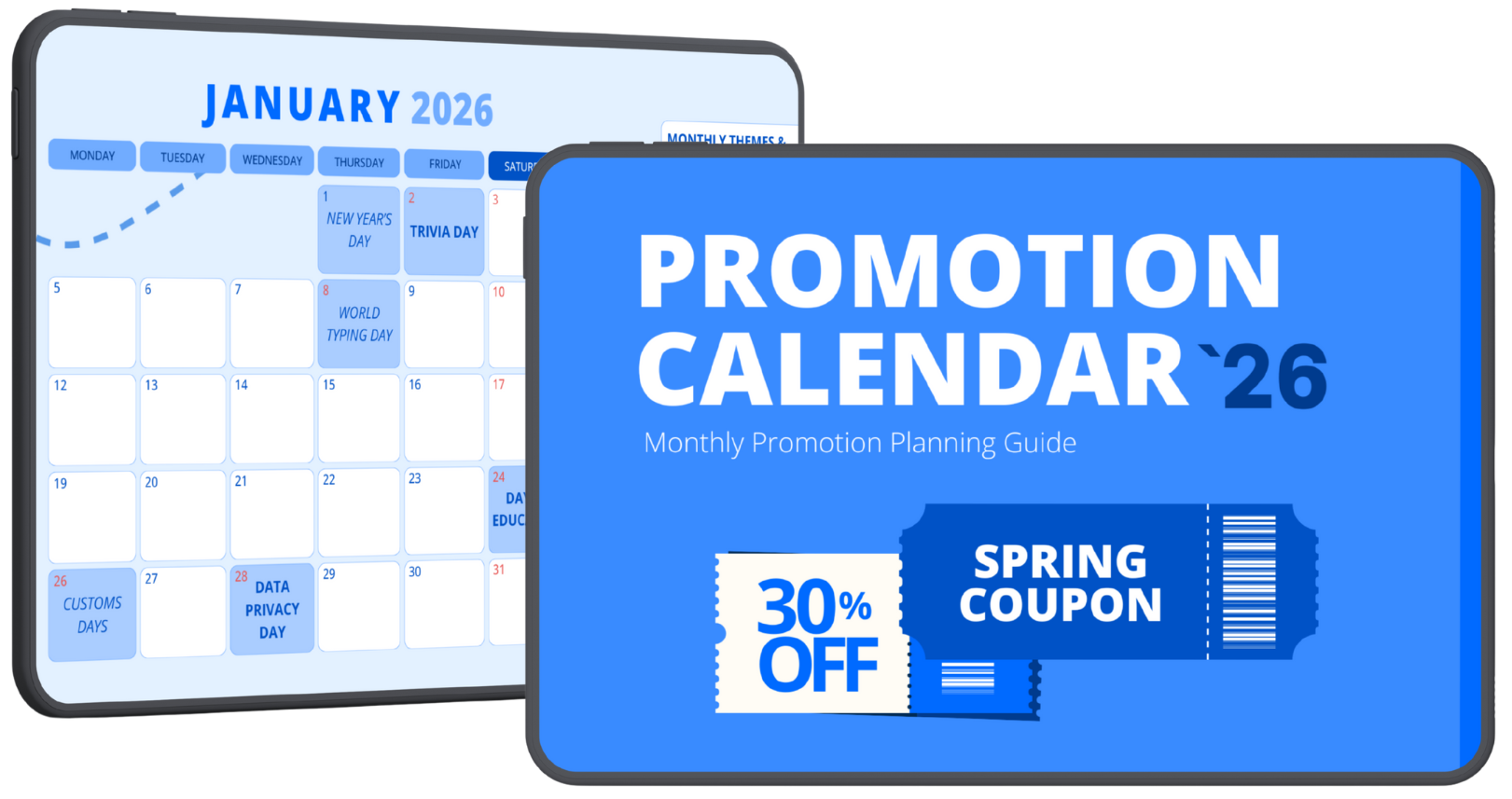
And if you want even more ideas, check out our FREE promotion calendar for 2026!
Why you need a marketing calendar for loyalty programs
A promotion calendar helps your marketing team stay proactive, data-informed, and aligned across every touchpoint. Here’s why it’s essential for your marketing efforts for 2026:
1. Plan with purpose
Having a structured new year marketing calendar means you can anticipate customer behaviour rather than chase it. You’ll know exactly when to launch key campaigns, align budgets, and create consistent storytelling throughout the year.
2. Maximise customer loyalty engagement
Loyalty programs perform best when promotions feel timely and relevant. A loyalty campaign planner ensures you’re enhancing customer engagement by gaging members with the right offers at the right moments, from New Year motivation to festive giving seasons.
3. Stay ahead with data-driven insights
2026 will bring new technologies and customer expectations, from AI-driven personalisation to value-based rewards. With a calendar in place, you can strategically test marketing trends for 2026 and customer data across various marketing channels while keeping your brand voice consistent.
4. Align teams and partners
A clear roadmap helps marketing, product, and CRM teams (plus agencies and partners) stay in sync. Everyone works from the same playbook, avoiding last-minute scrambles and ensuring cohesive campaigns across channels.
5. Measure what matters
When you plan your campaigns month by month, you can benchmark performance, optimise spend, and refine next year’s strategy. Each activation becomes part of a larger growth story rather than an isolated campaign or just marketing activities.
Key holidays and themes for 2026
Each month brings its own opportunities: cultural events, retail milestones, and emotional triggers that influence how people shop, spend, and engage with your brand.
By planning ahead, your entire team can launch loyalty campaigns that feel personal, timely, and data-driven.
🗓️ January - Fresh starts & resolutions
Theme: Motivation, renewal, wellbeing
Strategy: Reward your customers for achieving their resolutions.
- Launch a “New Year, New Rewards” campaign with bonus points for healthy or sustainable choices.
- Offer tier-based incentives for continued engagement through Q1.
- Highlight your brand’s new initiatives for the year: transparency and renewal resonate now.
💌 February – Love, loyalty & relationships
Theme: Connection and appreciation
Strategy: Go beyond Valentine’s Day, focus on community and emotional loyalty.
- Run “Share the Love” referral campaigns or surprise rewards through social media ads.
- Celebrate customer anniversaries and long-term members.
- Use personalised offers and gratitude messages: data shows that emotional engagement peaks in February.
🌸 March – Spring into action
Theme: Renewal, energy, and value
Strategy: Launch reactivation campaigns for dormant members.
- “Spring clean” your database with win-back incentives.
- Promote eco-friendly or limited-edition spring rewards.
- Test new gamification features or surveys to collect fresh data.
🌞 April – Experiments & growth
Theme: Innovation and discovery
Strategy: Tap into marketing trends for 2026: AI personalisation, predictive loyalty, and micro-segmentation.
- Test A/B campaigns using loyalty data insights.
- Partner with complementary brands for cross-promotions.
- Celebrate Earth Day with reward-for-donation or sustainable challenges.
🎉 May – Celebration & community
Theme: Connection, pride, and togetherness
Strategy: Recognise your audience and celebrate milestones.
- Launch a “Member Appreciation Month.”
- Spotlight customer stories and social proof.
- Introduce early-bird summer offers or anniversary tiers.
☀️ June – Summer engagement boost
Theme: Fun, travel, experiences
Strategy: Keep loyalty engagement high through incentives and flexibility.
- Offer travel-related rewards or instant redemptions.
- Use geo-targeted mobile offers for outdoor or event-based engagement.
- Run “Summer Challenge” gamification campaigns.
🔥 July – Mid-year momentum
Theme: Reassessment and retention
Strategy: Review half-year data and refresh campaign strategies.
- Introduce double-point days to counter mid-year fatigue.
- Launch feedback surveys tied to instant rewards.
- Plan teaser content for upcoming Q4 campaigns.
🍂 August – Back-to-business mode
Theme: Transition and preparation
Strategy: Shift focus to retention and back-to-school offers.
- Offer family-focused or productivity-themed rewards.
- Preview your autumn or Q4 loyalty roadmap.
- Run “welcome back” incentives for returning customers.
🍁 September – Loyalty innovation month
Theme: Smart strategy and data
Strategy: Showcase the evolution of your loyalty program.
- Highlight new features, app updates, or data insights.
- Leverage upcoming marketing trends for 2026 in your communications.
- Prep customers for major end-of-year campaigns.
🎃 October – Anticipation & offers
Theme: Mystery, excitement, urgency
Strategy: An effective marketing calendar will set the stage for holiday promotions.
- Run early-access loyalty events or sneak previews on social media platforms.
- Create limited-time Halloween or fall-themed gamified rewards.
- Segment audiences based on engagement for the big Q4 push.
🎁 November – Peak holiday activation
Theme: Reward frenzy
Strategy: Make loyalty the hero of your seasonal marketing.
- Offer early Black Friday deals exclusively to members.
- Use points multipliers, instant rewards, and cashback-style offers.
- Create urgency with countdowns and exclusive drops through email campaigns.
🎄 December – Gratitude & reflection
Theme: Giving, recognition, and emotional connection
Strategy: End the year by celebrating your customers.
- Send personalised “thank you” messages and year-in-review summaries.
- Reward top spenders and advocates with limited-edition gifts.
- Collect feedback for your 2027 loyalty strategy & marketing plan.
Frequently Asked Questions (FAQs)
1. What is a marketing calendar, and why do I need one for 2026?
A marketing calendar is a strategic roadmap that helps you plan campaigns, product launches, and loyalty promotions throughout the year. For 2026, it’s essential because customer journeys are more fragmented and data-driven: a calendar helps you align teams, anticipate seasonal peaks, and maintain consistent engagement across channels.
2. How does a loyalty campaign planner differ from a regular marketing calendar?
A loyalty campaign planner focuses specifically on engagement and retention strategies, and not just awareness. It integrates points-based rewards, gamification, member communication, and emotional loyalty campaigns around seasonal events to drive repeat purchases and advocacy.
3. What are the key marketing goals and trends for 2026?
The biggest marketing trends for 2026 include AI-driven personalisation, predictive loyalty analytics, sustainable rewards, and cross-brand collaborations. Data privacy and first-party data will remain central, while brands that integrate automation and emotional storytelling will lead customer retention.
4. What are some examples of seasonal loyalty campaigns that work?
- January: “New Year, New Rewards”: double points for healthy or eco-conscious choices.
- May: “Member Appreciation Month”: exclusive offers for loyal members.
- November: “Early Access Black Friday”: priority deals for loyalty members.
5. How early should I start planning my 2026 marketing campaigns?
Ideally, begin your 2026 marketing calendar planning at least 8–10 weeks before Q1. This gives you time to secure creative assets, align budgets, and prepare automation workflows, ensuring every campaign launches smoothly and strategically.
Turn planning into performance
A strong marketing and loyalty calendar for 2026 is all about moments that matter.
By aligning your holiday season's campaigns with consumer behaviour and emerging marketing trends for 2026, you can transform a tactical plan into a loyalty growth engine.
Download our free 2026 Promotion Calendar to start mapping your success story today.
Recommended Posts
If you enjoyed this article, check out these relevant posts below.
Share this Article

Sara Rabolini
Content Marketing Executive
Sara is our Content Marketing Executive. She shares engaging and informative content, helping businesses stay up-to-date with the latest trends and best practices in loyalty...